
Ang granite ay isang uri ng igneous rock na kinukuha dahil sa matinding lakas, densidad, tibay, at resistensya nito sa kalawang. Ngunit ang granite ay maraming gamit din – hindi lamang ito para sa mga parisukat at parihaba! Sa katunayan, may kumpiyansa kaming nakikipagtulungan sa mga bahagi ng granite na ginawa sa mga hugis, anggulo, at kurba ng lahat ng uri nang regular—na may mahusay na mga resulta.
Dahil sa aming makabagong proseso, ang mga pinutol na ibabaw ay maaaring maging napaka-patas. Ang mga katangiang ito ang dahilan kung bakit ang granite ay mainam na materyal para sa paggawa ng mga base ng makina at mga bahagi ng metrolohiya na may pasadyang laki at disenyo. Ang Granite ay:
■ maaaring makinahin
■ eksaktong patag kapag pinutol at tinapos
■ lumalaban sa kalawang
■ matibay
■ pangmatagalan
Madali ring linisin ang mga bahagi ng granite. Kapag gumagawa ng mga pasadyang disenyo, siguraduhing pumili ng granite dahil sa mga nakahihigit na benepisyo nito.
MGA PAMANTAYAN / MGA APLIKASYON SA MATAAS NA PAGKASUOT
Ang granite na ginagamit ng ZHHIMG para sa aming mga karaniwang produkto ng surface plate ay may mataas na nilalaman ng quartz, na nagbibigay ng mas mataas na resistensya sa pagkasira at pagkasira. Ang aming mga Superior Black na kulay ay may mababang water absorption rates, na nagpapaliit sa posibilidad na kalawangin ang iyong mga precision gauge habang nakalagay sa mga plato. Ang mga kulay ng granite na inaalok ng ZHHIMG ay nagreresulta sa mas kaunting silaw, na nangangahulugang mas kaunting pagkapagod ng mata para sa mga indibidwal na gumagamit ng mga plato. Pinili namin ang aming mga uri ng granite habang isinasaalang-alang ang thermal expansion sa pagsisikap na mapanatiling minimal ang aspetong ito.
MGA PASADYANG APLIKASYON
Kapag ang iyong aplikasyon ay nangangailangan ng isang plato na may mga pasadyang hugis, may sinulid na insert, mga puwang o iba pang machining, gugustuhin mong pumili ng materyal tulad ng Black Jinan Black. Ang natural na materyal na ito ay nag-aalok ng superior na stiffness, mahusay na vibration dampening, at pinahusay na machinability.
Mahalagang tandaan na ang kulay lamang ay hindi indikasyon ng pisikal na katangian ng bato. Sa pangkalahatan, ang kulay ng granite ay direktang nauugnay sa presensya o kawalan ng mga mineral, na maaaring walang epekto sa mga katangiang bumubuo sa mahusay na materyal para sa surface plate. May mga granite na kulay rosas, kulay abo, at itim na mahusay para sa mga surface plate, pati na rin ang mga granite na kulay itim, kulay abo, at kulay rosas na hindi angkop para sa mga aplikasyon na may katumpakan. Ang mga kritikal na katangian ng granite, na may kaugnayan sa paggamit nito bilang materyal para sa surface plate, ay walang kinalaman sa kulay, at ang mga sumusunod:
■ Katatagan (paglihis sa ilalim ng bigat - ipinapahiwatig ng Modulus ng Elastisidad)
■ Katigasan
■ Densidad
■ Paglaban sa pagkasira
■ Katatagan
■ Porosidad
Sinubukan na namin ang maraming materyales ng granite at pinagkumpara ang mga materyales na ito. Sa wakas, nakuha namin ang resulta, ang Jinan black granite ang pinakamahusay na materyal na aming nakilala. Ang Indian Black granite at South African granite ay katulad ng Jinan Black Granite, ngunit ang kanilang mga pisikal na katangian ay mas mababa kaysa sa Jinan Black Granite. Patuloy na maghahanap ang ZHHIMG ng mas maraming materyales ng granite sa mundo at pagkukumparahin ang kanilang mga pisikal na katangian.
Para sa karagdagang impormasyon tungkol sa granite na angkop para sa iyong proyekto, mangyaring makipag-ugnayan sa amin.info@zhhimg.com.
Iba't ibang pamantayan ang ginagamit ng iba't ibang tagagawa. Maraming pamantayan sa mundo.
DIN Standard, ASME B89.3.7-2013 o Federal Specification GGG-P-463c (Granite Surface Plates) at iba pa bilang batayan para sa kanilang mga ispesipikasyon.
At maaari kaming gumawa ng granite precision inspection plate ayon sa iyong mga pangangailangan. Malugod kaming tinatanggap na makipag-ugnayan sa amin kung nais mong malaman ang higit pang impormasyon tungkol sa iba pang mga pamantayan.
Ang pagiging patag ay maaaring ituring bilang lahat ng mga punto sa ibabaw na nakapaloob sa loob ng dalawang parallel na patag, ang base plane at ang roof plane. Ang pagsukat ng distansya sa pagitan ng mga patag ay ang kabuuang patag ng ibabaw. Ang pagsukat ng pagiging patag na ito ay karaniwang may tolerance at maaaring kabilang ang isang grade designation.
Halimbawa, ang mga tolerance sa flatness para sa tatlong karaniwang grado ay tinukoy sa pederal na ispesipikasyon gaya ng tinutukoy ng sumusunod na pormula:
■ Grado sa Laboratoryo AA = (40 + dayagonal na parisukat/25) x .000001" (unilateral)
■ Baitang ng Inspeksyon A = Baitang ng Laboratoryo AA x 2
■ Baitang B sa Silid ng Kagamitan = Baitang AA sa Laboratoryo x 4.
Para sa mga karaniwang laki ng mga surface plate, ginagarantiya namin ang mga flatness tolerance na lumalagpas sa mga kinakailangan ng ispesipikasyong ito. Bukod sa flatness, tinutugunan din ng ASME B89.3.7-2013 at Federal Specification GGG-P-463c ang mga paksang kabilang ang: katumpakan ng paulit-ulit na pagsukat, mga katangian ng materyal ng mga granite ng surface plate, surface finish, lokasyon ng support point, stiffness, mga katanggap-tanggap na paraan ng inspeksyon, pag-install ng mga threaded insert, atbp.
Ang mga granite surface plate at granite inspection plate ng ZHHIMG ay nakakatugon o lumalagpas sa lahat ng mga kinakailangang nakasaad sa ispesipikasyong ito. Sa kasalukuyan, walang tiyak na ispesipikasyon para sa mga granite angle plate, parallel, o master square.
At makikita mo ang mga pormula para sa iba pang mga pamantayan saI-DOWNLOAD.
Una, mahalagang panatilihing malinis ang plato. Ang alikabok na dala ng hangin ay kadalasang siyang pinakamalaking pinagmumulan ng pagkasira at pagkasira ng isang plato, dahil may posibilidad itong tumagos sa mga piraso ng trabaho at sa mga ibabaw na may kontak ng mga gauge. Pangalawa, takpan ang iyong plato upang protektahan ito mula sa alikabok at pinsala. Ang buhay ng pagkasira ay maaaring pahabain sa pamamagitan ng pagtakip sa plato kapag hindi ginagamit, sa pamamagitan ng paminsan-minsang pag-ikot ng plato upang ang isang bahagi ay hindi labis na magamit, at sa pamamagitan ng pagpapalit ng mga steel contact pad sa gauging ng mga carbide pad. Gayundin, iwasan ang paglalagay ng pagkain o soft drink sa plato. Tandaan na maraming soft drink ang naglalaman ng carbonic o phosphoric acid, na maaaring magtunaw ng mas malambot na mineral at mag-iwan ng maliliit na butas sa ibabaw.
Depende ito sa kung paano ginagamit ang plato. Kung maaari, inirerekomenda namin ang paglilinis ng plato sa simula ng araw (o shift ng trabaho) at muli sa pagtatapos. Kung ang plato ay marumihan, lalo na sa mga mamantika o malagkit na likido, dapat itong linisin kaagad.
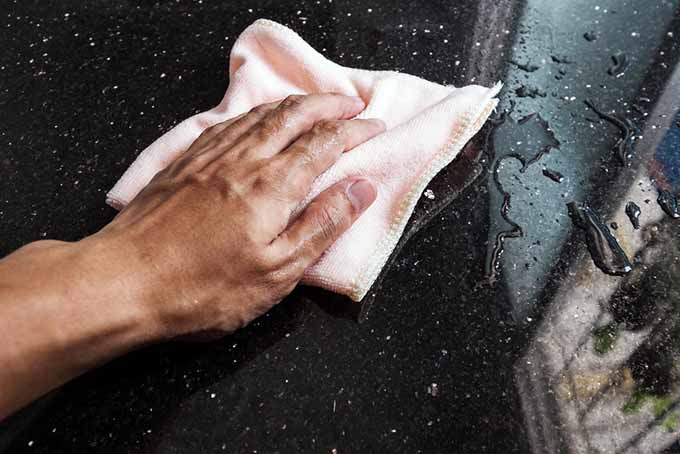
Linisin ang plato nang regular gamit ang likido o ZHHIMG Waterless surface plate cleaner. Mahalaga ang pagpili ng mga solusyon sa paglilinis. Kung gagamit ng volatile solvent (acetone, lacquer thinner, alcohol, atbp.), ang pagsingaw ay magpapalamig sa ibabaw, at magpapabaluktot dito. Sa kasong ito, kinakailangang hayaang maging normal ang plato bago gamitin dahil kung hindi ay magkakaroon ng mga pagkakamali sa pagsukat.
Ang tagal ng oras na kinakailangan para maging normal ang plato ay mag-iiba depende sa laki ng plato, at sa tagal ng pagpapalamig. Ang isang oras ay dapat sapat para sa mas maliliit na plato. Maaaring kailanganin ang dalawang oras para sa mas malalaking plato. Kung gagamit ng water-based cleaner, magkakaroon din ng kaunting evaporative chilling.
Pananatilihin din ng plato ang tubig, at maaari itong magdulot ng kalawang sa mga bahaging metal na nakadikit sa ibabaw. Ang ilang panlinis ay nag-iiwan din ng malagkit na residue pagkatapos matuyo, na siyang aakit ng alikabok na papalipad sa hangin, at sa katunayan ay magpapataas ng pagkasira, sa halip na bawasan ito.
Depende ito sa paggamit ng plato at sa kapaligiran. Inirerekomenda namin na ang isang bagong plato o precision granite accessory ay sumailalim sa isang buong recalibration sa loob ng isang taon mula sa pagbili. Kung ang granite surface plate ay madalas gamitin, maaaring ipinapayong paikliin ang agwat na ito sa anim na buwan. Ang buwanang inspeksyon para sa paulit-ulit na mga error sa pagsukat gamit ang Electronic level, o katulad na aparato ay magpapakita ng anumang mga umuusbong na marka ng pagkasira at aabutin lamang ng ilang minuto upang maisagawa. Matapos matukoy ang mga resulta ng unang recalibration, ang agwat ng calibration ay maaaring pahabain o paikliin kung pinahihintulutan o kinakailangan ng iyong internal quality system.
Maaari kaming mag-alok ng serbisyo upang matulungan kang siyasatin at i-calibrate ang iyong granite surface plate.

Mayroong ilang mga posibleng dahilan para sa mga pagkakaiba-iba sa pagitan ng mga kalibrasyon:
- Ang ibabaw ay hinugasan gamit ang mainit o malamig na solusyon bago ang pagkakalibrate, at hindi binigyan ng sapat na oras upang maging normal.
- Hindi maayos ang suporta ng plato
- Pagbabago ng temperatura
- Mga draft
- Direktang sikat ng araw o iba pang radiant heat sa ibabaw ng plato. Siguraduhing hindi pinapainit ng ilaw sa itaas ang ibabaw.
- Mga pagkakaiba-iba sa patayong gradient ng temperatura sa pagitan ng taglamig at tag-araw (Kung maaari, alamin ang patayong gradient na temperatura sa oras na isinasagawa ang kalibrasyon.)
- Hindi binigyan ng sapat na oras ang plato para maging normal pagkatapos ng pagpapadala
- Maling paggamit ng kagamitan sa inspeksyon o paggamit ng kagamitang hindi naka-calibrate
- Pagbabago sa ibabaw na resulta ng pagkasira
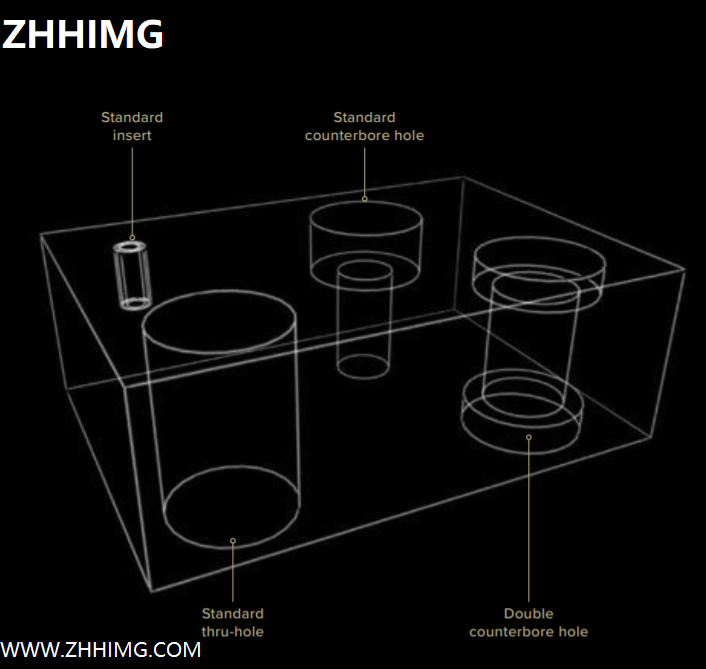
Ilang uri ng butas ang mayroon sa precision granite?
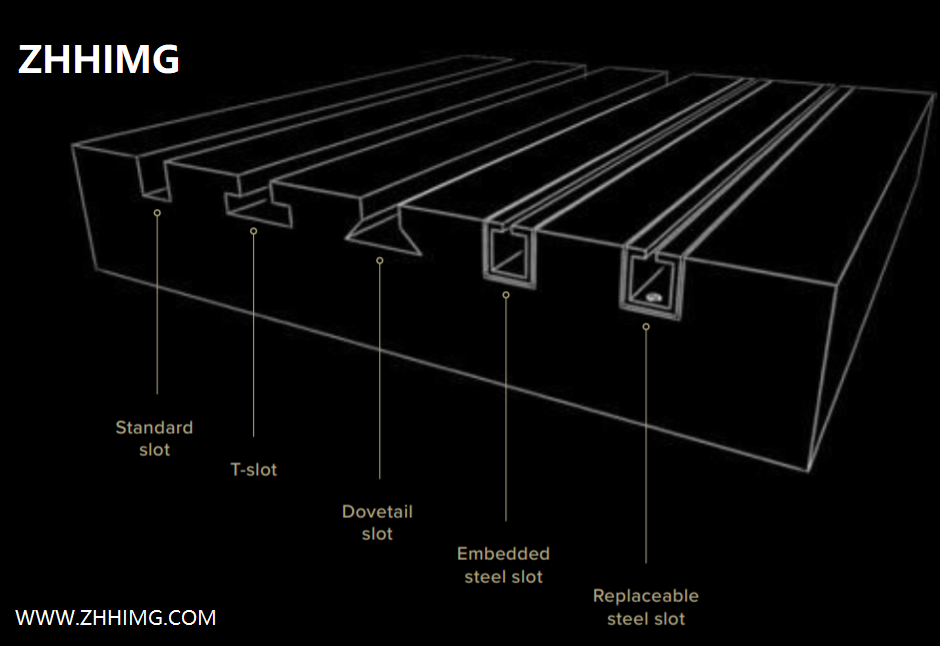
Mga Puwang sa mga Bahagi ng Precision Granite
Para sa maraming pabrika, silid ng inspeksyon, at laboratoryo, ang mga precision granite surface plate ang siyang basehan para sa tumpak na pagsukat. Dahil ang bawat linear na pagsukat ay nakadepende sa isang tumpak na reference surface kung saan kinukuha ang mga huling sukat, ang mga surface plate ang nagbibigay ng pinakamahusay na reference plane para sa inspeksyon at layout bago ang machining. Ang mga ito rin ay mainam na base para sa paggawa ng mga sukat ng taas at pag-gage ng mga ibabaw. Bukod pa rito, ang mataas na antas ng pagiging patag, katatagan, pangkalahatang kalidad, at pagkakagawa ay ginagawa silang isang mahusay na pagpipilian para sa pag-mount ng mga sopistikadong mekanikal, elektroniko, at optical gaging system. Para sa alinman sa mga prosesong ito ng pagsukat, mahalagang panatilihing naka-calibrate ang mga surface plate.
Ulitin ang mga Pagsukat at Pagkapatas
Ang parehong patag at paulit-ulit na pagsukat ay mahalaga upang matiyak ang isang katumpakan ng ibabaw. Ang patag ay maaaring ituring bilang lahat ng mga punto sa ibabaw na nakapaloob sa loob ng dalawang parallel na eroplano, ang base plane at ang roof plane. Ang pagsukat ng distansya sa pagitan ng mga eroplano ay ang pangkalahatang patag ng ibabaw. Ang pagsukat ng patag na ito ay karaniwang may tolerance at maaaring kabilang ang isang grade designation.
Ang mga tolerance sa flatness para sa tatlong karaniwang grado ay tinukoy sa pederal na ispesipikasyon gaya ng tinutukoy ng sumusunod na pormula:
DIN Standard, GB Standard, ASME Standard, JJS standard... iba't ibang bansa na may iba't ibang paninindigan...
Higit pang detalye tungkol sa pamantayan.
Bukod sa pagiging patag, dapat ding tiyakin ang kakayahang maulit. Ang pagsukat ng paulit-ulit ay isang pagsukat ng mga lokal na lugar ng pagiging patag. Ito ay isang pagsukat na ginawa kahit saan sa ibabaw ng isang plato na uulit sa loob ng nakasaad na tolerance. Ang pagkontrol sa pagiging patag ng lokal na lugar sa isang mas mahigpit na tolerance kaysa sa pangkalahatang pagiging patag ay ginagarantiyahan ang unti-unting pagbabago sa profile ng pagiging patag ng ibabaw, sa gayon ay binabawasan ang mga lokal na error.
Upang matiyak na ang isang surface plate ay nakakatugon sa parehong mga ispesipikasyon ng flatness at repeat measurement, dapat gamitin ng mga tagagawa ng granite surface plates ang Federal Specification GGG-P-463c bilang batayan para sa kanilang mga ispesipikasyon. Tinutugunan ng pamantayang ito ang katumpakan ng repeat measurement, mga katangian ng materyal ng surface plate granite, surface finish, lokasyon ng support point, stiffness, mga katanggap-tanggap na pamamaraan ng inspeksyon at pag-install ng mga threaded insert.
Pagsusuri sa Katumpakan ng Plato
Sa pamamagitan ng pagsunod sa ilang simpleng alituntunin, ang isang pamumuhunan sa isang granite surface plate ay dapat tumagal nang maraming taon. Depende sa paggamit ng plate, kapaligiran sa pagawaan, at kinakailangang katumpakan, ang dalas ng pagsusuri sa katumpakan ng surface plate ay nag-iiba. Ang isang pangkalahatang tuntunin ay ang isang bagong plate ay makatanggap ng buong muling pagkakalibrate sa loob ng isang taon mula sa pagbili. Kung ang plate ay madalas na ginagamit, ipinapayong paikliin ang agwat na ito sa anim na buwan.
Bago pa man lumampas sa espesipikasyon para sa pangkalahatang kapal ang isang surface plate, ipapakita nito ang mga sira o kulot na poste. Ang buwanang inspeksyon para sa mga error sa paulit-ulit na pagsukat gamit ang repeat reading gage ay tutukoy sa mga batik ng pagkasira. Ang repeat reading gage ay isang instrumentong may mataas na katumpakan na nakakakita ng lokal na error at maaaring ipakita sa isang high magnification electronic amplifier.
Ang isang epektibong programa ng inspeksyon ay dapat magsama ng mga regular na pagsusuri gamit ang isang autocollimator, na nagbibigay ng aktwal na pagkakalibrate ng pangkalahatang kapatagan na masusubaybayan sa National Institute of Standards and Technology (NIST). Ang komprehensibong pagkakalibrate ng tagagawa o isang independiyenteng kumpanya ay kinakailangan paminsan-minsan.
Mga Pagkakaiba-iba sa Pagitan ng mga Kalibrasyon
Sa ilang mga kaso, may mga pagkakaiba-iba sa pagitan ng mga pagkakalibrate ng surface plate. Minsan, ang mga salik tulad ng pagbabago sa surface na resulta ng pagkasira, maling paggamit ng kagamitan sa inspeksyon o paggamit ng kagamitang hindi naka-calibrate ay maaaring magpaliwanag sa mga pagkakaiba-ibang ito. Gayunpaman, ang dalawang pinakakaraniwang salik ay ang temperatura at suporta.
Isa sa mga pinakamahalagang baryabol ay ang temperatura. Halimbawa, ang ibabaw ay maaaring nahugasan gamit ang mainit o malamig na solusyon bago ang pagkakalibrate at hindi binigyan ng sapat na oras upang maging normal. Ang iba pang mga sanhi ng pagbabago ng temperatura ay kinabibilangan ng mga hanging malamig o mainit, direktang sikat ng araw, ilaw sa itaas o iba pang pinagmumulan ng radiant heat sa ibabaw ng plato.
Maaari ring magkaroon ng mga pagkakaiba-iba sa patayong gradient ng temperatura sa pagitan ng taglamig at tag-araw. Sa ilang mga kaso, ang plato ay hindi binibigyan ng sapat na oras upang maging normal pagkatapos ng pagpapadala. Mainam na itala ang patayong gradient na temperatura sa oras na isinasagawa ang kalibrasyon.
Isa pang karaniwang sanhi ng pagkakaiba-iba ng kalibrasyon ay ang isang plato na hindi wastong sinusuportahan. Ang isang plato sa ibabaw ay dapat suportahan sa tatlong punto, na mainam na matatagpuan 20% ng haba papasok mula sa mga dulo ng plato. Dalawang suporta ang dapat na matatagpuan 20% ng lapad papasok mula sa mahahabang gilid, at ang natitirang suporta ay dapat na nasa gitna.
Tatlong punto lamang ang maaaring matibay na nakapatong sa anumang bagay maliban sa isang tumpak na ibabaw. Ang pagtatangkang suportahan ang plato nang higit sa tatlong punto ay magiging sanhi ng pagtanggap ng plato ng suporta nito mula sa iba't ibang kombinasyon ng tatlong punto, na hindi na magiging parehong tatlong punto kung saan ito sinuportahan noong produksyon. Magdudulot ito ng mga error habang ang plato ay lumilihis upang umayon sa bagong kaayusan ng suporta. Isaalang-alang ang paggamit ng mga steel stand na may mga support beam na idinisenyo upang luminya sa wastong mga support point. Ang mga stand para sa layuning ito ay karaniwang makukuha mula sa tagagawa ng surface plate.
Kung ang plato ay maayos na sinusuportahan, ang tumpak na pagpapantay ay kinakailangan lamang kung ito ay tinukoy ng isang aplikasyon. Hindi kinakailangan ang pagpapantay upang mapanatili ang katumpakan ng isang plato na maayos na sinusuportahan.
Pahabain ang Buhay ng Plato
Ang pagsunod sa ilang mga alituntunin ay makakabawas sa pagkasira ng isang granite surface plate at sa huli, magpapahaba sa buhay nito.
Una, mahalagang panatilihing malinis ang plato. Ang alikabok na dala ng hangin ay kadalasang siyang pinakamalaking pinagmumulan ng pagkasira at pagkasira ng isang plato, dahil may posibilidad itong maipit sa mga workpiece at sa mga ibabaw na nakadikit sa mga gauge.
Mahalaga ring takpan ang mga plato upang protektahan ito mula sa alikabok at pinsala. Maaaring pahabain ang buhay ng paggamit sa pamamagitan ng pagtakip sa plato kapag hindi ginagamit.
Paikutin ang plato paminsan-minsan upang hindi labis na magamit ang isang bahagi. Inirerekomenda rin na palitan ang mga steel contact pad sa gauging ng mga carbide pad.
Iwasang maglagay ng pagkain o soft drink sa plato. Maraming soft drink ang naglalaman ng carbonic o phosphoric acid, na maaaring magtunaw ng mas malambot na mineral at mag-iwan ng maliliit na butas sa ibabaw.
Saan Mag-relap
Kapag ang isang granite surface plate ay kailangang i-resurface, isaalang-alang kung ipapagawa ang serbisyong ito on-site o sa calibration facility. Mas mainam na ipa-relapse ang plate sa pabrika o sa isang nakalaang pasilidad. Gayunpaman, kung ang plate ay hindi masyadong malubha ang pagkasira, kadalasan ay nasa loob ng 0.001 pulgada ng kinakailangang tolerance, maaari itong i-resurface on-site. Kung ang isang plate ay nasira hanggang sa puntong ito ay higit sa 0.001 pulgada ang layo mula sa tolerance, o kung ito ay may malalang butas o butas, dapat itong ipadala sa pabrika para sa paggiling bago i-relapse.
Ang isang pasilidad ng pagkakalibrate ay may kagamitan at setting ng pabrika na nagbibigay ng pinakamainam na mga kondisyon para sa wastong pagkakalibrate ng plato at muling paggawa kung kinakailangan.
Dapat maging maingat sa pagpili ng on-site calibration at resurfacing technician. Humingi ng akreditasyon at beripikahin kung ang kagamitang gagamitin ng technician ay may traceable calibration. Mahalaga rin ang karanasan, dahil maraming taon ang kailangan para matutunan kung paano gamitin nang tama ang precision granite.
Ang mga kritikal na pagsukat ay nagsisimula sa isang tumpak na granite surface plate bilang baseline. Sa pamamagitan ng pagtiyak ng isang maaasahang reperensya sa pamamagitan ng paggamit ng isang maayos na naka-calibrate na surface plate, ang mga tagagawa ay mayroong isa sa mahahalagang kagamitan para sa maaasahang pagsukat at mas mahusay na kalidad ng mga piyesa.Q
Checklist para sa mga Variation ng Kalibrasyon
1. Ang ibabaw ay hinugasan gamit ang mainit o malamig na solusyon bago ang pagkakalibrate at hindi binigyan ng sapat na oras upang maging normal.
2. Hindi wastong nasuportahan ang plato.
3. Pagbabago ng temperatura.
4. Mga burador.
5. Direktang sikat ng araw o iba pang radiant heat sa ibabaw ng plato. Siguraduhing hindi pinapainit ng ilaw sa itaas ang ibabaw.
6. Mga pagkakaiba-iba sa patayong gradient ng temperatura sa pagitan ng taglamig at tag-araw. Kung maaari, alamin ang patayong gradient na temperatura sa oras na isinasagawa ang pagkakalibrate.
7. Hindi binigyan ng sapat na oras ang plato para maging normal pagkatapos ng pagpapadala.
8. Maling paggamit ng kagamitan sa pag-iinspeksyon o paggamit ng kagamitang hindi naka-calibrate.
9. Pagbabago sa ibabaw na resulta ng pagkasira.
Mga Tip sa Teknolohiya
- Dahil ang bawat linear na pagsukat ay nakasalalay sa isang tumpak na reference surface kung saan kinukuha ang mga pangwakas na dimensyon, ang mga surface plate ay nagbibigay ng pinakamahusay na reference plane para sa inspeksyon ng trabaho at layout bago ang machining.
- Ang pagkontrol sa lokal na kapatagan sa mas mahigpit na tolerance kaysa sa pangkalahatang kapatagan ay ginagarantiyahan ang unti-unting pagbabago sa profile ng kapatagan ng ibabaw, sa gayon ay binabawasan ang mga lokal na error.
- Dapat kasama sa isang epektibong programa ng inspeksyon ang mga regular na pagsusuri gamit ang isang autocollimator, na nagbibigay ng aktwal na kalibrasyon ng pangkalahatang kapatagan na maaaring masubaybayan sa National Inspection Authority.
Sa mga partikulo ng mineral na bumubuo sa granite, mahigit 90% ay feldspar at quartz, kung saan ang feldspar ang pinakamarami. Ang feldspar ay kadalasang puti, kulay abo, at pula-balat, at ang quartz ay halos walang kulay o kulay-abong puti, na siyang bumubuo sa pangunahing kulay ng granite. Ang feldspar at quartz ay matigas na mineral, at mahirap itong igalaw gamit ang kutsilyong bakal. Kung tungkol sa mga maitim na batik sa granite, karamihan ay itim na mika, may ilang iba pang mineral. Bagama't medyo malambot ang biotite, hindi mahina ang kakayahan nitong labanan ang stress, at kasabay nito ay mayroon silang maliit na dami sa granite, kadalasang wala pang 10%. Ito ang kondisyon ng materyal kung saan ang granite ay partikular na malakas.
Isa pang dahilan kung bakit matibay ang granite ay dahil ang mga particle ng mineral nito ay mahigpit na nakadikit sa isa't isa at nakabaon sa isa't isa. Ang mga butas ay kadalasang bumubuo ng wala pang 1% ng kabuuang volume ng bato. Nagbibigay ito sa granite ng kakayahang makayanan ang malalakas na presyon at hindi madaling mapasok ng kahalumigmigan.
Ang mga bahagi ng granite ay gawa sa bato na walang kalawang, acid at alkali resistance, mahusay na wear resistance at mahabang buhay ng serbisyo, walang espesyal na maintenance. Ang mga bahagi ng granite precision ay kadalasang ginagamit sa tooling ng industriya ng makinarya. Samakatuwid, ang mga ito ay tinatawag na granite precision components o granite components. Ang mga katangian ng mga bahagi ng granite precision components ay halos kapareho ng sa mga granite platform. Panimula sa tooling at pagsukat ng mga bahagi ng granite precision: Ang precision machining at micro machining technology ay mahahalagang direksyon ng pag-unlad ng industriya ng paggawa ng makinarya, at ang mga ito ay naging isang mahalagang tagapagpahiwatig upang masukat ang isang high-tech na antas. Ang pag-unlad ng makabagong teknolohiya at industriya ng depensa ay hindi mapaghihiwalay sa precision machining at micro-machining technology. Ang mga bahagi ng granite ay maaaring maayos na madulas sa pagsukat, nang walang stagnation. Ang pagsukat ng work surface, ang mga pangkalahatang gasgas ay hindi nakakaapekto sa katumpakan ng pagsukat. Ang mga bahagi ng granite ay kailangang idisenyo at gawin ayon sa mga kinakailangan ng demand side.
Patlang ng aplikasyon:
Gaya ng alam nating lahat, parami nang parami ang mga makina at kagamitan na pumipili ng mga precision granite component.
Ang mga bahaging granite ay ginagamit para sa dynamic motion, linear motors, cmm, cnc, laser machine...
malugod na makipag-ugnayan sa amin para sa karagdagang impormasyon.
Ang mga aparatong panukat ng granite at mga mekanikal na bahagi ng granite ay gawa sa mataas na kalidad na Jinan Black granite. Dahil sa kanilang mataas na katumpakan, mahabang tagal, mahusay na katatagan at resistensya sa kalawang, ang mga ito ay lalong ginagamit sa inspeksyon ng produkto ng modernong industriya at mga siyentipikong larangan tulad ng mekanikal na aerospace at mga siyentipikong pananaliksik.
Mga Kalamangan
----Dobleng tigas ng bakal na hinulma;
----Ang pinakamaliit na pagbabago sa dimensyon ay dahil sa mga pagbabago sa temperatura;
----Walang pagkaantala, kaya walang pagkaantala sa trabaho;
----Walang mga burr o nakausli dahil sa pinong istruktura ng butil at hindi gaanong pagdikit, na nagsisiguro ng mataas na antas ng pagkapatag sa mahabang buhay ng serbisyo at hindi nagdudulot ng pinsala sa ibang mga bahagi o instrumento;
----Madaling gamitin sa mga materyales na magnetiko nang walang problema;
---- Mahabang buhay at walang kalawang, na nagreresulta sa mababang gastos sa pagpapanatili.
Ang mga precision granite surface plate ay may katumpakan at mataas na pamantayan ng pagkapatas upang makamit ang katumpakan at ginagamit bilang base para sa pag-mount ng mga sopistikadong mekanikal, elektroniko, at optical gauging system.
Ilan sa mga natatanging katangian ng granite surface plate:
Pagkakapareho sa Katigasan;
Tumpak na mga Kondisyon sa ilalim ng karga;
Sumisipsip ng Panginginig;
Madaling Linisin;
Hindi tinatablan ng pambalot;
Mababang Porosidad;
Hindi Nakasasakit;
Hindi Magnetiko
Mga Bentahe ng Granite Surface Plate
Una, ang bato ay nagiging pare-pareho ang istraktura pagkatapos ng mahabang panahon ng natural na pagtanda, at ang koepisyent ay minimum, kaya ang panloob na stress ay ganap na nawawala, hindi nababago ang hugis, kaya mataas ang katumpakan.
Pangalawa, walang mga gasgas, hindi sa ilalim ng mga kondisyon ng pare-parehong temperatura, sa temperatura ng silid ay maaari ring mapanatili ang katumpakan ng pagsukat ng temperatura.
Pangatlo, hindi magnetization, ang pagsukat ay maaaring maging makinis na paggalaw, walang malangitngit na pakiramdam, hindi apektado ng kahalumigmigan, ang eroplano ay naayos.
Apat, mabuti ang tigas, mataas ang tigas, at malakas ang resistensya sa pagkagalos.
Lima, hindi natatakot sa acid, alkaline liquid erosion, hindi kalawangin, hindi kailangang pinturahan ng langis, hindi madaling malagkit na micro-dust, pagpapanatili, madaling mapanatili, mahabang buhay ng serbisyo.
Bakit pipiliin ang granite base sa halip na cast iron machine bed?
1. Ang base ng makinang granite ay maaaring mapanatili ang mas mataas na katumpakan kaysa sa base ng makinang cast iron. Ang base ng makinang cast iron ay madaling maapektuhan ng temperatura at halumigmig ngunit ang base ng makinang granite ay hindi;
2. Dahil pareho ang laki ng granite machine base at cast iron base, mas matipid ang granite machine base kaysa sa cast iron;
3. Mas madaling tapusin ang espesyal na base ng makinang granite kaysa sa base ng makinang cast iron.
Ang mga granite surface plate ay mga pangunahing instrumento sa mga inspection lab sa buong bansa. Ang naka-calibrate at napakapatag na ibabaw ng isang surface plate ay nagbibigay-daan sa mga inspektor na gamitin ang mga ito bilang baseline para sa mga inspeksyon ng bahagi at pagkakalibrate ng instrumento. Kung wala ang katatagan na ibinibigay ng mga surface plate, marami sa mga bahaging mahigpit ang tolerance sa iba't ibang larangan ng teknolohiya at medikal ay magiging mas mahirap, kung hindi man imposible, na gawin nang tama. Siyempre, upang magamit ang isang granite surface block upang i-calibrate at siyasatin ang iba pang mga materyales at kagamitan, ang katumpakan ng granite mismo ay dapat tasahin. Maaaring i-calibrate ng mga gumagamit ang isang granite surface plate upang matiyak ang katumpakan nito.
Linisin ang granite surface plate bago ang pagkakalibrate. Magbuhos ng kaunting panlinis ng surface plate sa isang malinis at malambot na tela at punasan ang ibabaw ng granite. Patuyuin agad ang panlinis mula sa surface plate gamit ang tuyong tela. Huwag hayaang matuyo sa hangin ang likidong panlinis.
Maglagay ng panukat na paulit-ulit sa gitna ng ibabaw ng granite plate.
I-zero ang repeat measuring gauge sa ibabaw ng granite plate.
Dahan-dahang igalaw ang gauge sa ibabaw ng granite. Panoorin ang indicator ng gauge at itala ang mga peak ng anumang pagkakaiba-iba ng taas habang inililipat mo ang instrumento sa plato.
Ihambing ang pagkakaiba-iba ng pagiging patag sa ibabaw ng plato sa mga tolerance para sa iyong surface plate, na nag-iiba batay sa laki ng plato at sa antas ng pagiging patag ng granite. Sumangguni sa pederal na ispesipikasyon na GGG-P-463c (tingnan ang Resources) upang matukoy kung ang iyong plato ay nakakatugon sa mga kinakailangan sa pagiging patag para sa laki at antas nito. Ang pagkakaiba-iba sa pagitan ng pinakamataas na punto sa plato at ng pinakamababang punto sa plato ay ang sukat ng pagiging patag nito.
Tiyakin na ang pinakamalaking pagkakaiba-iba ng lalim sa ibabaw ng plato ay nasa loob ng mga ispesipikasyon ng pag-uulit para sa isang plato na may ganoong laki at grado. Sumangguni sa pederal na ispesipikasyon na GGG-P-463c (tingnan ang Resources) upang matukoy kung ang iyong plato ay nakakatugon sa mga kinakailangan sa pag-uulit para sa laki nito. Tanggihan ang ibabaw na plato kung kahit isang punto ay hindi nakakatugon sa mga kinakailangan sa pag-uulit.
Itigil ang paggamit ng granite surface plate na hindi nakakatugon sa mga pederal na kinakailangan. Ibalik ang plate sa tagagawa o sa isang kumpanya ng granite surfacing upang muling makintab ang bloke upang matugunan ang mga ispesipikasyon.
Tip
Magsagawa ng pormal na kalibrasyon nang kahit isang beses bawat taon, bagaman ang mga granite surface plate na madalas gamitin ay dapat na mas madalas na i-calibrate.
Ang pormal at naitatala na kalibrasyon sa mga kapaligiran ng pagmamanupaktura o inspeksyon ay kadalasang isinasagawa ng quality assurance o isang panlabas na vendor ng mga serbisyo sa kalibrasyon, bagama't maaaring gumamit ang sinuman ng repeat measuring gauge upang impormal na suriin ang isang surface plate bago gamitin.
Ang Maagang Kasaysayan ng mga Granite Surface Plate
Bago ang Ikalawang Digmaang Pandaigdig, gumamit ang mga Tagagawa ng mga Steel Surface Plate para sa dimensyong inspeksyon ng mga bahagi. Noong Ikalawang Digmaang Pandaigdig, ang pangangailangan para sa bakal ay tumaas nang husto, at maraming Steel Surface Plate ang natunaw. Kinailangan ng kapalit, at ang Granite ang naging materyal na pinili dahil sa superior na metrological properties nito.
Maraming bentahe ng granite kaysa sa bakal ang naging kitang-kita. Mas matigas ang granite, bagama't mas malutong at madaling madurog. Maaari mong ilapat ang Granite sa mas patag at mas mabilis na anyo kaysa sa bakal. Mayroon ding kanais-nais na katangian ang granite na mas mababa ang thermal expansion kumpara sa bakal. Bukod pa rito, kung ang isang steel plate ay kailangang kumpunihin, kailangan itong kaskasin nang kamay ng mga artisan na gumamit din ng kanilang mga kasanayan sa muling pagtatayo ng machine tool.
Bilang karagdagan sa tala, ang ilang Steel Surface Plates ay ginagamit pa rin ngayon.
Mga Katangiang Metrolohikal ng mga Platong Granite
Ang granite ay isang batong igneous na nabuo dahil sa mga pagsabog ng bulkan. Bilang paghahambing, ang marmol ay metamorphosed limestone. Para sa paggamit sa metrolohiya, ang granite na napili ay dapat matugunan ang mga partikular na kinakailangan na nakabalangkas sa Federal Specification GGG-P-463c, mula ngayon ay tatawaging Fed Specs, at partikular na, Bahagi 3.1 3.1 Sa mga Fed Specs, ang granite ay dapat na may pino hanggang katamtamang butil na tekstura.
Ang granite ay isang matigas na materyal, ngunit ang katigasan nito ay nag-iiba-iba dahil sa ilang kadahilanan. Maaaring tantyahin ng isang bihasang granite plate technician ang katigasan sa pamamagitan ng kulay nito na isang indikasyon ng nilalaman ng quartz nito. Ang katigasan ng granite ay isang katangian na bahagyang natutukoy ng dami ng nilalaman ng quartz at kawalan ng mika. Ang pula at rosas na granite ay kadalasang pinakamatigas, ang mga kulay abo ay katamtamang katigasan, at ang mga itim ang pinakamalambot.
Ang Young's Modulus of Elasticity ay ginagamit upang ipahayag ang flexibility o indikasyon ng katigasan ng bato. Ang pink granite ay may average na 3-5 puntos sa iskala, ang gray ay 5-7 puntos at ang blacks ay 7-10 puntos. Kung mas maliit ang numero, mas tumitigas ang granite. Kung mas malaki ang numero, mas malambot at mas flexible ang granite. Mahalagang malaman ang katigasan ng Granite kapag pumipili ng kapal na kinakailangan para sa mga tolerance grade at ang bigat ng mga bahagi at gauge na nakalagay dito.
Noong unang panahon, noong may mga tunay na machinist, na kilala sa kanilang mga buklet ng trig table sa bulsa ng kanilang mga damit, ang itim na granite ay itinuturing na "Ang Pinakamahusay." Ang Pinakamahusay ay binibigyang kahulugan bilang ang uri na nagbibigay ng pinakamatibay na resistensya sa pagkasira o mas matigas. Ang isang disbentaha ay ang mas matigas na granite ay mas madaling mabasag o mabutas. Kumbinsido ang mga machinist na ang itim na granite ang pinakamahusay kaya't kinulayan ang mga ito ng itim ng ilang tagagawa ng pink na granite.
Personal kong nasaksihan ang isang plaka na nahulog mula sa isang forklift nang ilipat mula sa imbakan. Tumama ang plaka sa sahig at nahati sa dalawa na nagpapakita ng tunay na kulay rosas. Mag-ingat kung nagpaplano kang bumili ng itim na granite mula sa Tsina. Inirerekomenda namin na sayangin mo ang iyong pera sa ibang paraan. Ang isang granite plate ay maaaring mag-iba ang tigas sa loob nito. Ang isang guhit ng quartz ay maaaring mas matigas kaysa sa iba pang bahagi ng surface plate. Ang isang patong ng itim na gabbro ay maaaring magpapalambot ng isang bahagi. Ang isang mahusay na sinanay at may karanasang mga technician sa pagkukumpuni ng surface plate ay alam kung paano pangasiwaan ang mga malambot na bahaging ito.
Mga Grado ng Plato sa Ibabaw
Mayroong apat na grado ng mga surface plate. Laboratory grade AA at A, Room Inspection Grade B, at ang pang-apat ay Workshop Grade. Ang AA at A ng Grade ang pinakamapatag na may flatness tolerances na mas mahusay kaysa sa 0.00001 in para sa isang Grade AA plate. Ang Workshop Grades ang pinakamaliit ang kapal at gaya ng ipinahihiwatig ng pangalan, ang mga ito ay para gamitin sa mga tool room. Samantalang ang Grade AA, Grade A at Grade B ay para gamitin sa isang inspection o quality control lab.
PPagsubok ng Roper Para sa Kalibrasyon ng Surface Plate
Palagi kong sinasabi sa aking mga kostumer na kaya kong hilahin palabas ng simbahan ang sinumang 10 taong gulang at turuan sila kung paano subukan ang isang plato sa loob lamang ng ilang araw. Hindi ito mahirap. Nangangailangan ito ng ilang pamamaraan upang mabilis na maisagawa ang gawain, mga pamamaraan na natututunan ng isang tao sa paglipas ng panahon at maraming pag-uulit. Dapat kong ipaalam sa iyo, at hindi ko mabibigyan ng sapat na diin, ang Fed Spec GGG-P-463c AY HINDI isang pamamaraan ng pagkakalibrate! Mas marami pang pag-uusapan diyan mamaya.
Ang kalibrasyon ng pangkalahatang patag (Mean Pane) at mga pagsusuri sa Repeatability (localized wear) ay kinakailangan Ayon sa Fed Specs. Ang tanging eksepsiyon dito ay sa maliliit na plato kung saan ang repeatability lamang ang kinakailangan.
Gayundin, at kasinghalaga ng iba pang mga pagsubok, ay ang pagsubok para sa mga thermal gradient. (Tingnan ang Delta T sa ibaba)
Pigura 1
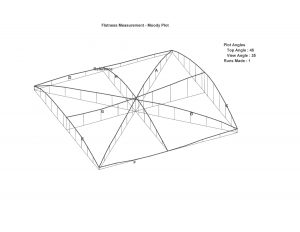
Ang Flatness Testing ay may 4 na aprubadong pamamaraan. Mga elektronikong antas, autocollimation, laser at isang aparato na kilala bilang plane locator. Gumagamit lamang kami ng mga elektronikong antas dahil ang mga ito ang pinakatumpak at pinakamabilis na pamamaraan sa ilang kadahilanan.
Ang mga laser at autocollimator ay gumagamit ng isang napakatuwid na sinag ng liwanag bilang sanggunian. Sinusukat ang tuwid na bahagi ng isang granite surface plate sa pamamagitan ng paghahambing ng pagkakaiba-iba ng distansya sa pagitan ng surface plate at ng sinag ng liwanag. Sa pamamagitan ng pagkuha ng isang tuwid na sinag ng liwanag, na tinatamaan ito ng isang reflector target habang inililipat ang reflector target pababa sa surface plate, ang distansya sa pagitan ng inilalabas na sinag at ng return beam ay isang sukatan ng tuwid na bahagi.
Narito ang problema sa pamamaraang ito. Ang target at ang pinagmulan ay apektado ng panginginig ng boses, temperatura ng paligid, isang target na hindi pantay o gasgas, kontaminasyon sa hangin, at paggalaw ng hangin (mga agos). Ang lahat ng ito ay nag-aambag ng karagdagang mga bahagi ng error. Bukod pa rito, mas malaki ang kontribusyon ng error ng operator mula sa mga pagsusuri gamit ang isang autocollimator.
Ang isang bihasang gumagamit ng autocollimator ay maaaring gumawa ng mga tumpak na sukat ngunit nahaharap pa rin sa mga problema sa pagkakapare-pareho ng mga pagbasa lalo na sa mas mahahabang distansya dahil ang mga repleksyon ay may posibilidad na lumawak o bahagyang lumabo. Gayundin, ang isang hindi perpektong patag na target at ang mahabang araw ng pagsilip sa lente ay nagdudulot ng karagdagang mga error.
Kalokohan lang ang isang plane locator device. Gumagamit ang device na ito ng medyo tuwid (kumpara sa isang sobrang tuwid na collimated o laser beam ng liwanag) bilang reperensya. Hindi lamang gumagamit ang mechanical device ng indicator na karaniwang may 20 u Inch resolution lamang, kundi pati na rin ang hindi tuwid na bahagi ng bar at magkakaibang materyales ay nakadaragdag nang malaki sa mga error sa pagsukat. Sa aming palagay, bagama't katanggap-tanggap ang pamamaraan, walang karampatang laboratoryo ang gagamit ng plane locating device bilang pangwakas na instrumento sa inspeksyon.
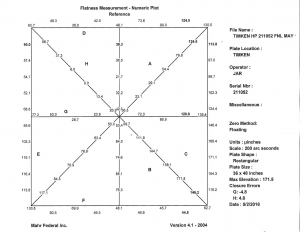
Ginagamit ng mga elektronikong antas ang grabidad bilang kanilang sanggunian. Ang mga differential elektronikong antas ay hindi apektado ng panginginig ng boses. Mayroon silang resolusyon na kasingbaba ng .1 arc second at ang mga pagsukat ay mabilis, tumpak at napakaliit ng kontribusyon ng error mula sa isang bihasang operator. Hindi nagbibigay ang mga Plane Locator o autocollimator ng mga computer-generated topographical (Figure 1) o isometric plot (Figure 2) ng ibabaw.
Pigura 2
Isang Wastong Pagsubok sa Pagkapatas ng Ibabaw
Ang wastong patag na pagsusuri sa ibabaw ay isang mahalagang bahagi ng papel na ito kaya dapat ko na itong inilagay sa simula. Gaya ng nabanggit kanina, ang Fed Spec. GGG-p-463c ay HINDI isang paraan ng pagkakalibrate. Nagsisilbi itong gabay para sa maraming aspeto ng granite na may gradong metrolohiya na ang nilalayong bumili ay ang anumang Ahensya ng Pamahalaang Pederal, at kabilang dito ang mga pamamaraan ng pagsusuri at mga tolerance o grado. Kung inaangkin ng isang kontratista na sumunod sila sa Fed Specs, ang halaga ng patag na pagsusuri ay dapat matukoy ng Moody Method.
Si Moody ay isang taong nagmula pa noong dekada '50 na nakaisip ng isang pamamaraang matematikal upang matukoy ang pangkalahatang pagiging patag at isaalang-alang ang oryentasyon ng mga linyang sinubukan, kung ang mga ito ay sapat na magkalapit sa iisang patag. Walang nagbago. Sinubukan ng Allied Signal na pagbutihin ang pamamaraang matematikal ngunit napagpasyahan na ang mga pagkakaiba ay napakaliit na hindi sulit ang pagsisikap.
Kung ang isang kontratista ng surface plate ay gumagamit ng Electronic Levels o laser, gumagamit siya ng computer upang tulungan siya sa mga kalkulasyon. Kung walang tulong ng computer, ang technician na gumagamit ng autocollimation ay dapat kalkulahin ang mga pagbasa gamit ang kamay. Sa katotohanan, hindi nila ginagawa. Masyado itong matagal at sa totoo lang ay maaaring maging masyadong mahirap. Sa isang flatness test gamit ang Moody Method, sinusubok ng technician ang walong linya sa isang configuration ng Union Jack para sa tuwid na anyo.
Ang Paraan ng Moody
Ang Moody Method ay isang paraan ng matematika upang matukoy kung ang walong linya ay nasa iisang patag. Kung hindi, mayroon ka lamang 8 tuwid na linya na maaaring nasa o malapit sa iisang patag. Dagdag pa rito, ang isang kontratista na nagsasabing sumusunod sa Fed Spec, at gumagamit ng autocollimation, aydapatbumuo ng walong pahina ng datos. Isang pahina para sa bawat linya ang sinuri upang patunayan ang kanyang pagsubok, pagkukumpuni, o pareho. Kung hindi, walang ideya ang kontratista kung ano ang tunay na halaga ng patag.
Sigurado akong kung isa ka sa mga nagpapa-calibrate ng mga plaka mo sa isang kontratista gamit ang autocollimation, hindi mo pa nakikita ang mga pahinang iyon! Ang Figure 3 ay isang halimbawa ngisa langpahina ng walong kinakailangan upang makalkula ang pangkalahatang kapatagan. Isang indikasyon ng kamangmangan at masamang hangarin na iyon ay kung ang iyong ulat ay may magagandang bilugan na mga numero. Halimbawa, 200, 400, 650, atbp. Ang isang wastong nakalkulang halaga ay isang tunay na numero. Halimbawa 325.4 u In. Kapag ginamit ng kontratista ang Moody Method ng mga kalkulasyon, at manu-manong kinakalkula ng technician ang mga halaga, dapat kang makatanggap ng walong pahina ng mga kalkulasyon at isang isometric plot. Ipinapakita ng isometric plot ang iba't ibang taas sa iba't ibang linya at kung gaano kalaking distansya ang naghihiwalay sa mga napiling intersecting point.
Pigura 3(Kailangan ng walong pahinang ganito para manu-manong kalkulahin ang pagiging patag. Siguraduhing itanong kung bakit hindi mo ito nakukuha kung gumagamit ng autocollimation ang iyong kontratista!)
Pigura 4
Gumagamit ang mga technician ng Dimensional Gauge ng mga differential level (Larawan 4) bilang mga ginustong aparato upang sukatin ang maliliit na pagbabago sa angularity mula sa istasyon ng pagsukat patungo sa isa pa. Ang mga antas ay may resolusyon na hanggang .1 arc seconds (5 u Pulgada gamit ang 4″ sled) at lubos na matatag, hindi apektado ng vibration, mga distansyang nasukat, mga daloy ng hangin, pagkapagod ng operator, kontaminasyon ng hangin o alinman sa mga problemang likas sa ibang mga aparato. Idagdag ang tulong ng computer, at ang gawain ay magiging medyo mabilis, na bubuo ng mga topographical at isometric plot na nagpapatunay sa beripikasyon at higit sa lahat sa pagkukumpuni.
Isang Wastong Pagsubok sa Pag-uulit
Ang paulit-ulit na pagbasa o repeatability ang pinakamahalagang pagsubok. Ang kagamitang ginagamit namin upang maisagawa ang repeatability test ay isang repeat reading fixture, isang LVDT at isang amplifier na kinakailangan para sa mga high-resolution na pagbasa. Itinakda namin ang LVDT amplifier sa minimum na resolution na 10 u Inches o 5 u Inches para sa mga high accuracy plate.
Walang saysay ang paggamit ng mechanical indicator na may resolution na 20 u Inches lamang kung sinusubukan mong subukan ang repeatability requirement na 35 u Inches. Ang mga indicator ay may uncertainty na 40 u Inches! Ginagaya ng repeat reading setup ang height gage/part configuration.
Ang repeatability ay HINDI katulad ng overall flatness (Mean Plane). Gusto kong isipin ang repeatability sa granite bilang isang consistent radius measurement.
Pigura 5
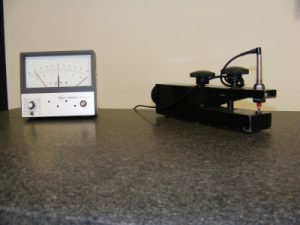
Kung susubukan mo ang pag-uulit ng isang bilog na bola, naipakita mo na ang radius ng bola ay hindi nagbago. (Ang mainam na profile ng isang maayos na naayos na plato ay may hugis na convex crowned.) Gayunpaman, maliwanag na ang bola ay hindi patag. Medyo. Sa napakaikling distansya, ito ay patag. Dahil ang karamihan sa mga gawain sa inspeksyon ay kinabibilangan ng isang height gage na malapit sa bahagi, ang pag-uulit ay nagiging pinakamahalagang katangian ng isang granite plate. Mas mahalaga kaysa sa pangkalahatang pagkapatas maliban kung sinusuri ng isang gumagamit ang tuwid ng isang mahabang bahagi.
Siguraduhing magsagawa ang iyong kontratista ng repeat reading test. Ang isang plato ay maaaring magkaroon ng repeat reading na labis na lumalagpas sa tolerance ngunit pumasa pa rin sa flatness test! Kamangha-mangha na ang isang laboratoryo ay maaaring makakuha ng akreditasyon sa pagsusuring hindi kasama ang repeat reading test. Ang isang laboratoryo na hindi kayang magkumpuni o hindi gaanong mahusay sa pagkukumpuni ay mas gustong magsagawa lamang ng flatness testing. Bihirang magbago ang flatness maliban kung ililipat mo ang plato.
Ang paulit-ulit na pagsusuri sa pagbasa ang pinakamadaling subukan ngunit ang pinakamahirap gawin kapag nagla-lapping. Siguraduhing maibabalik ng iyong kontratista ang kakayahang maulit nang hindi "nasisira" ang ibabaw o nag-iiwan ng mga alon sa ibabaw.
Pagsubok sa Delta T
Kabilang sa pagsusulit na ito ang pagsukat ng TUNAY na temperatura ng bato sa itaas at ilalim na bahagi nito at pagkalkula ng pagkakaiba, Delta T, para sa pag-uulat sa sertipiko.
Mahalagang malaman na ang average coefficient ng thermal expansion sa granite ay 3.5 uIn/Pulgada/degree. Bale-wala ang epekto ng ambient temperature at humidity sa isang granite plate. Gayunpaman, ang isang surface plate ay maaaring lumagpas sa tolerance o kung minsan ay bumuti kahit na nasa isang .3 – .5 degree F Delta T. Kinakailangang malaman kung ang Delta T ay nasa loob ng .12 degrees F kung saan ang differential mula sa huling calibration.
Mahalaga ring malaman na ang ibabaw ng trabaho ng isang plato ay lumilipat patungo sa init. Kung ang temperatura sa itaas ay mas mainit kaysa sa ilalim, ang ibabaw ay tumataas. Kung ang ilalim ay mas mainit, na bibihira, ang ibabaw ay lumulubog. Hindi sapat para sa isang quality manager o technician na malaman na ang plato ay patag at maaaring ulitin sa oras ng pagkakalibrate o pagkukumpuni kundi kung ano ang Delta T nito sa oras ng pangwakas na pagsubok sa pagkakalibrate. Sa mga kritikal na sitwasyon, maaaring matukoy ng isang gumagamit, sa pamamagitan ng pagsukat mismo ng Delta T, kung ang isang plato ay lumampas sa tolerance dahil lamang sa mga pagkakaiba-iba ng Delta T. Sa kabutihang palad, ang granite ay tumatagal ng maraming oras o kahit na araw upang umangkop sa isang kapaligiran. Ang mga maliliit na pagbabago-bago sa temperatura ng paligid sa buong araw ay hindi makakaapekto dito. Dahil sa mga kadahilanang ito, hindi namin iniuulat ang temperatura o halumigmig ng paligid dahil ang mga epekto ay bale-wala.
Pagsuot ng Plato ng Granite
Bagama't mas matigas ang granite kaysa sa mga bakal na plato, nagkakaroon pa rin ng mabababang batik sa ibabaw ang granite. Ang paulit-ulit na paggalaw ng mga bahagi at gauge sa ibabaw na plato ang pinakamalaking pinagmumulan ng pagkasira, lalo na kung ang parehong bahagi ay palaging ginagamit. Ang dumi at alikabok na hinahayaang manatili sa ibabaw ng plato ay nagpapabilis sa proseso ng pagkasira habang napupunta ito sa pagitan ng mga bahagi o gauge at ng ibabaw ng granite. Kapag ginagalaw ang mga bahagi at gauge sa ibabaw nito, ang nakasasakit na alikabok ang kadalasang sanhi ng karagdagang pagkasira. Lubos kong inirerekomenda ang patuloy na paglilinis upang mabawasan ang pagkasira. Nakakita na kami ng pagkasira sa mga plato na dulot ng pang-araw-araw na paghahatid ng pakete ng UPS na inilalagay sa ibabaw ng mga plato! Ang mga lokal na bahaging iyon ng pagkasira ay nakakaapekto sa mga pagbasa ng pagsubok sa pag-ulit ng pagkakalibrate. Iwasan ang pagkasira sa pamamagitan ng regular na paglilinis.
Paglilinis ng Plato ng Granite
Para mapanatiling malinis ang plato, gumamit ng tack cloth para matanggal ang grit. Pindutin lang nang marahan para hindi mag-iwan ng natitirang pandikit. Ang isang tack cloth na madalas gamitin ay mahusay sa pag-alis ng alikabok na nanggagaling sa pagitan ng mga paglilinis. Huwag magtrabaho sa iisang lugar. Ilipat ang iyong setup sa paligid ng plato, ipamahagi ang mga sira. Ayos lang na gumamit ng alkohol para linisin ang plato, ngunit tandaan na ang paggawa nito ay pansamantalang magpapalamig sa ibabaw. Mainam ang tubig na may kaunting sabon. Ang mga panlinis na mabibili sa merkado tulad ng Starrett's cleaner ay mahusay ding gamitin, ngunit siguraduhing maalis mo ang lahat ng nalalabing sabon sa ibabaw.
Pagkukumpuni ng Plato ng Granite
Dapat nang maging malinaw na ngayon ang kahalagahan ng pagtiyak na ang iyong surface plate contractor ay nagsasagawa ng mahusay na kalibrasyon. Ang mga laboratoryong uri ng "Clearing House" na nag-aalok ng mga programang "Do it all with one call" ay bihirang magkaroon ng technician na kayang gumawa ng mga pagkukumpuni. Kahit na nag-aalok sila ng mga pagkukumpuni, hindi sila laging mayroong technician na may kinakailangang karanasan kapag ang surface plate ay lubhang lampas sa tolerance.
Kung masabihan ka na hindi na maaayos ang isang plato dahil sa matinding pagkasira, tawagan kami. Malamang na magagawa namin ang pagkukumpuni.
Ang aming mga technician ay nagtatrabaho ng isa hanggang isa at kalahating taong apprenticeship sa ilalim ng isang Master Surface Plate Technician. Tinutukoy namin ang isang Master Surface Plate Technician bilang isang taong nakakumpleto ng kanilang apprenticeship at may karagdagang mahigit sampung taon ng karanasan sa Surface Plate calibration at Repair. Kami sa Dimensional Gauge ay may tatlong Master Technician sa staff na may pinagsamang mahigit 60 taon ng karanasan. Isa sa aming Master Technician ay laging handang tumulong at gabay kapag may mga mahirap na sitwasyon. Lahat ng aming technician ay may karanasan sa mga surface plate calibration ng lahat ng laki, mula sa maliit hanggang sa napakalaki, iba't ibang kondisyon sa kapaligiran, iba't ibang industriya, at sa mga pangunahing problema sa pagkasira.
Ang Fed Specs ay may espesipikong kinakailangan sa pagtatapos na 16 hanggang 64 Average Arithmetic Roughness (AA). Mas gusto namin ang pagtatapos na nasa hanay na 30-35 AA. Mayroon lamang sapat na pagkamagaspang upang matiyak na ang mga bahagi at gauge ay gumagalaw nang maayos at hindi dumidikit o pumipiga sa ibabaw na plato.
Kapag nagkukumpuni kami, sinusuri namin ang plato para sa wastong pagkakabit at pagkakapantay. Gumagamit kami ng dry lapping method, ngunit sa mga kaso ng matinding pagkasira na nangangailangan ng malaking pag-alis ng granite, ginagamit namin ang wet lap. Nililinis ng aming mga technician ang kanilang mga sarili, sila ay masinsinan, mabilis, at tumpak. Mahalaga ito dahil kasama sa gastos ng serbisyo sa granite plate ang iyong downtime at nawalang produksyon. Ang isang mahusay na pagkukumpuni ay napakahalaga, at hindi ka dapat pumili ng kontratista batay sa presyo o kaginhawahan. Ang ilang trabaho sa pagkakalibrate ay nangangailangan ng mga taong may mataas na sinanay. Mayroon kami niyan.
Mga Pangwakas na Ulat sa Kalibrasyon
Para sa bawat pagkukumpuni at pagkakalibrate ng surface plate, nagbibigay kami ng detalyadong mga propesyonal na ulat. Ang aming mga ulat ay naglalaman ng malaking halaga ng parehong kritikal at may-katuturang impormasyon. Kinakailangan ng Fed Spec. ang karamihan sa impormasyong ibinigay namin. Hindi kasama ang mga nakapaloob sa iba pang mga pamantayan ng kalidad tulad ng ISO/IEC-17025, ang minimum na Fed. Specs para sa mga ulat ay:
- Sukat sa Talampakan (X' x X')
- Kulay
- Estilo (Tumutukoy sa mga ledge na walang pang-ipit o dalawa o apat na ledge)
- Tinatayang Modulus ng Elastisidad
- Katamtamang Pagpaparaya sa Plane (Tinutukoy ng Grado/Sukat)
- Tolerance sa paulit-ulit na pagbasa (Tinutukoy sa pamamagitan ng haba ng dayagonal sa pulgada)
- Mean Plane gaya ng Natagpuan
- Mean Plane bilang kaliwa
- Ulitin ang pagbasa ayon sa natagpuan
- Ulitin ang pagbasa habang nasa kaliwa
- Delta T (Pagkakaiba ng temperatura sa pagitan ng mga ibabaw sa itaas at ibaba)
Kung kailangang magsagawa ang technician ng paglalagay ng lapping o pagkukumpuni sa surface plate, ang sertipiko ng pagkakalibrate ay may kasamang topographical o isometric plot upang patunayan ang isang wastong pagkukumpuni.
Isang Salita Tungkol sa mga Akreditasyon ng ISO/IEC-17025 at ang mga laboratoryong mayroon nito
Hindi porket may akreditasyon ang isang laboratoryo sa surface plate calibration ay nangangahulugang alam na nila ang kanilang ginagawa, lalo na ang paggawa nito nang tama! Hindi rin naman nangangahulugang kaya na ng laboratoryo ang pagkukumpuni. Hindi pinag-iiba ng mga accrediting bodies ang beripikasyon o calibration (pagkukumpuni).Aat may kilala akong isa, marahil2mga katawang nag-aakredito naLkurbataAribbon sa paligid ng aso ko kung sapat ang binayaran ko sa kanila! Nakakalungkot na katotohanan. Nakakita na ako ng mga laboratoryo na nakakuha ng akreditasyon sa pamamagitan lamang ng isa sa tatlong kinakailangang pagsusuri. Bukod dito, nakakita na ako ng mga laboratoryo na nakakuha ng akreditasyon na may hindi makatotohanang mga kawalan ng katiyakan at nakakuha ng akreditasyon nang walang anumang patunay o demonstrasyon kung paano nila kinalkula ang mga halaga. Nakalulungkot ang lahat ng ito.
Pagbubuod
Hindi mo maaaring maliitin ang papel ng mga precision granite plate. Ang patag na reperensya na ibinibigay ng mga granite plate ang pundasyon kung saan mo ginagawa ang lahat ng iba pang sukat.
Maaari mong gamitin ang pinakamoderno, pinakatumpak, at pinaka-magagamit na mga instrumento sa pagsukat. Gayunpaman, mahirap tiyakin ang mga tumpak na sukat kung ang reference surface ay hindi patag. Minsan, may isang prospective na customer na nagsabi sa akin ng "buti na lang bato lang 'yan!" Ang sagot ko, "Sige, tama ka, at tiyak na hindi mo maaaring bigyang-katwiran ang pagpapapunta ng mga eksperto para panatilihin ang iyong mga surface plate."
Ang presyo ay hindi kailanman isang magandang dahilan para pumili ng mga kontratista ng surface plate. Hindi laging naiintindihan ng mga mamimili, accountant, at isang nakakabahalang bilang ng mga de-kalidad na inhinyero na ang muling pagsertipika ng mga granite plate ay hindi katulad ng muling pagsertipika ng isang micrometer, caliper, o isang DMM.
Ang ilang instrumento ay nangangailangan ng kadalubhasaan, hindi mababang presyo. Gayunpaman, ang aming mga presyo ay lubos na makatwiran. Lalo na dahil sa pagkakaroon ng kumpiyansa na nagagawa namin nang tama ang trabaho. Higit pa sa mga kinakailangan ng ISO-17025 at mga Pederal na Espesipikasyon ang aming nagagawa sa dagdag na halaga.
Ang mga surface plate ang pundasyon para sa maraming sukat ng dimensyon, at ang wastong pag-aalaga sa iyong surface plate ay kinakailangan upang matiyak ang katumpakan ng pagsukat.
Ang granite ang pinakasikat na materyal na ginagamit para sa mga surface plate dahil sa mainam nitong pisikal na katangian, tulad ng katigasan ng ibabaw at mababang sensitibidad sa pagbabago-bago ng temperatura. Gayunpaman, sa patuloy na paggamit, ang mga surface plate ay nakakaranas ng pagkasira.
Ang pagiging patag at kakayahang maulit ay parehong kritikal na aspeto para matukoy kung ang isang plato ay nagbibigay ng tumpak na ibabaw para sa pagkuha ng tumpak na mga sukat. Ang mga tolerance para sa parehong aspeto ay tinukoy sa ilalim ng Federal Specification GGG-P-463C, DIN, GB, JJS... Ang pagiging patag ay ang pagsukat ng distansya sa pagitan ng pinakamataas na punto (ang roof plane) at ang pinakamababang punto (ang base plane) sa plato. Tinutukoy ng kakayahang maulit kung ang isang sukat na kinuha mula sa isang lugar ay maaaring ulitin sa buong plato sa loob ng nakasaad na tolerance. Tinitiyak nito na walang mga peak o valley sa plato. Kung ang mga pagbasa ay wala sa loob ng nakasaad na mga alituntunin, maaaring kailanganin ang resurfacing upang maibalik ang mga sukat sa ispesipikasyon.
Kinakailangan ang regular na pagkakalibrate ng surface plate upang matiyak ang pagiging patag at pag-uulit sa paglipas ng panahon. Ang precision measurement group sa Cross ay kinikilala ng ISO 17025 para sa pagkakalibrate ng pagiging patag at pag-uulit ng surface plate. Ginagamit namin ang Mahr Surface Plate Certification System na nagtatampok ng:
- Pagsusuri ng Moody at Profile,
- Mga Isometric o Numeric plot,
- Maramihang Karaniwang Pagtakbo, at
- Awtomatikong Pagmamarka Ayon sa mga Pamantayan ng Industriya.
Tinutukoy ng Mahr Computer Assisted Model ang anumang angular o linear na paglihis mula sa absolute level, at mainam para sa lubos na tumpak na pag-profile ng mga surface plate.
Ang mga pagitan sa pagitan ng mga pagkakalibrate ay mag-iiba depende sa dalas ng paggamit, mga kondisyon sa kapaligiran kung saan matatagpuan ang plato, at mga partikular na kinakailangan sa kalidad ng iyong kumpanya. Ang wastong pagpapanatili ng iyong surface plate ay maaaring magpahintulot ng mas mahabang pagitan sa pagitan ng bawat pagkakalibrate, makakatulong sa iyong maiwasan ang karagdagang gastos ng pag-ulit ng pagkakalibrate, at higit sa lahat ay tinitiyak na ang mga sukat na makukuha mo sa plato ay tumpak hangga't maaari. Bagama't mukhang matibay ang mga surface plate, ang mga ito ay mga instrumentong may katumpakan at dapat ituring na ganoon. Narito ang ilang bagay na dapat isaalang-alang tungkol sa pangangalaga ng iyong mga surface plate:
- Panatilihing malinis ang plato, at kung maaari ay takpan ito kapag hindi ginagamit
- Walang dapat ilagay sa plato maliban sa mga panukat o mga piraso na susukatin.
- Huwag gamitin ang parehong bahagi sa plato sa bawat pagkakataon.
- Kung maaari, paminsan-minsang iikot ang plato.
- Igalang ang limitasyon ng karga ng iyong plaka
Maaaring Pagbutihin ng Precision Granite Base ang Pagganap ng Machine Tool
Patuloy na tumataas ang mga pangangailangan sa mechanical engineering sa pangkalahatan at sa partikular na konstruksyon ng machine tool. Ang pagkamit ng pinakamataas na katumpakan at mga halaga ng pagganap nang hindi tumataas ang mga gastos ay patuloy na mga hamon sa pagiging mapagkumpitensya. Ang bed ng machine tool ay isang mapagpasyang salik dito. Samakatuwid, parami nang parami ang mga tagagawa ng machine tool na umaasa sa granite. Dahil sa mga pisikal na parameter nito, nag-aalok ito ng malinaw na mga bentahe na hindi makakamit sa bakal o polymer concrete.
Ang granite ay isang tinatawag na bulkanikong malalim na bato at may napakasiksik at homogenous na istraktura na may napakababang koepisyent ng paglawak, mababang thermal conductivity at mataas na vibration damping.
Sa ibaba ay matutuklasan mo kung bakit ang karaniwang opinyon na ang granite ay angkop lamang bilang base ng makina para sa mga high-end na coordinate measuring machine ay matagal nang lipas na at kung bakit ang natural na materyal na ito bilang base ng machine tool ay isang napaka-pakinabang na alternatibo sa bakal o cast iron kahit na para sa mga high-precision machine tool.
Maaari kaming gumawa ng mga bahagi ng granite para sa dynamic motion, mga bahagi ng granite para sa linear motors, mga bahagi ng granite para sa ndt, mga bahagi ng granite para sa x-ray, mga bahagi ng granite para sa cmm, mga bahagi ng granite para sa cnc, granite precision para sa laser, mga bahagi ng granite para sa aerospace, mga bahagi ng granite para sa mga precision stages...
Mataas na Dagdag na Halaga Nang Walang Karagdagang Gastos
Ang pagtaas ng paggamit ng granite sa mechanical engineering ay hindi dahil sa napakalaking pagtaas ng presyo ng bakal. Bagkus, ito ay dahil ang karagdagang halaga para sa makinang pangkamay na nakakamit gamit ang isang machine bed na gawa sa granite ay posible sa napakaliit o walang karagdagang gastos. Ito ay pinatutunayan ng mga paghahambing ng gastos ng mga kilalang tagagawa ng makinang pangkamay sa Germany at Europe.
Ang malaking pakinabang sa thermodynamic stability, vibration damping at pangmatagalang katumpakan na ginawang posible ng granite ay hindi makakamit gamit ang cast iron o steel bed, o sa medyo mataas na gastos lamang. Halimbawa, ang mga thermal error ay maaaring umabot sa hanggang 75% ng kabuuang error ng isang makina, na kadalasang sinusubukang mapunan ng software – na may katamtamang tagumpay. Dahil sa mababang thermal conductivity nito, ang granite ang mas mainam na pundasyon para sa pangmatagalang katumpakan.
Sa tolerance na 1 μm, madaling natutugunan ng granite ang mga kinakailangan sa flatness ayon sa DIN 876 para sa antas ng katumpakan na 00. Sa halagang 6 sa hardness scale na 1 hanggang 10, ito ay lubhang matigas, at sa tiyak na bigat nito na 2.8g/cm³, halos naaabot nito ang halaga ng aluminum. Nagreresulta rin ito sa mga karagdagang bentahe tulad ng mas mataas na feed rate, mas mataas na axis acceleration at pagpapahaba ng tool life para sa mga cutting machine tool. Kaya, ang pagbabago mula sa cast bed patungo sa granite machine bed ay naglilipat sa machine tool na pinag-uusapan sa high-end class sa mga tuntunin ng katumpakan at pagganap – nang walang karagdagang gastos.
Pinahusay na Bakas sa Ekolohiya ng Granite
Kabaligtaran ng mga materyales tulad ng bakal o cast iron, ang natural na bato ay hindi kailangang gawin gamit ang malaking enerhiya at mga additives. Medyo maliit na halaga lamang ng enerhiya ang kinakailangan para sa quarrying at surface treatment. Nagreresulta ito sa isang superior ecological footprint, na kahit sa katapusan ng buhay ng isang makina ay higit pa sa bakal bilang isang materyal. Ang granite bed ay maaaring maging batayan para sa isang bagong makina o gamitin para sa ganap na magkakaibang layunin tulad ng paggupit para sa paggawa ng kalsada.
Wala ring kakulangan sa mga mapagkukunan para sa granite. Ito ay isang malalim na bato na nabuo mula sa magma sa loob ng crust ng lupa. Ito ay 'nagkahinog' sa loob ng milyun-milyong taon at makukuha sa napakaraming dami bilang isang likas na yaman sa halos lahat ng kontinente, kabilang ang buong Europa.
Konklusyon: Ang maraming nakikitang bentahe ng granite kumpara sa bakal o cast iron ay nagbibigay-katwiran sa pagtaas ng kahandaan ng mga mechanical engineer na gamitin ang natural na materyal na ito bilang pundasyon para sa mga high-precision at high-performance na machine tool. Ang detalyadong impormasyon tungkol sa mga katangian ng granite, na kapaki-pakinabang para sa mga machine tool at mechanical engineering, ay matatagpuan sa karagdagang artikulong ito.
Ang paulit-ulit na pagsukat ay isang pagsukat ng mga lokal na patag na bahagi. Nakasaad sa ispesipikasyon ng Pagsukat ng Ulitin na ang isang pagsukat na ginawa kahit saan sa ibabaw ng isang plato ay uulit sa loob ng nakasaad na tolerance. Ang pagkontrol sa lokal na patag na bahagi na mas mahigpit kaysa sa pangkalahatang patag ay ginagarantiyahan ang unti-unting pagbabago sa profile ng patag na bahagi ng ibabaw sa gayon ay binabawasan ang mga lokal na error.
Karamihan sa mga tagagawa, kabilang ang mga imported na tatak, ay sumusunod sa Federal Specification ng pangkalahatang flatness tolerances ngunit marami ang hindi nakakapansin sa mga paulit-ulit na pagsukat. Marami sa mga low value o budget plate na makukuha sa merkado ngayon ay hindi magagarantiya ng mga paulit-ulit na pagsukat. Ang isang tagagawa na hindi ginagarantiyahan ang mga paulit-ulit na pagsukat ay HINDI gumagawa ng mga plato na nakakatugon sa mga kinakailangan ng ASME B89.3.7-2013 o Federal Specification GGG-P-463c, o DIN 876, GB, JJS...
Pareho silang mahalaga upang matiyak ang katumpakan ng ibabaw para sa mga tumpak na sukat. Ang ispesipikasyon ng pagiging patag lamang ay hindi sapat upang garantiyahan ang katumpakan ng pagsukat. Halimbawa, ang isang 36 X 48 Inspection Grade A surface plate, na nakakatugon LAMANG sa ispesipikasyon ng pagiging patag na .000300". Kung ang pirasong sinusuri ay nagdudugtong sa ilang mga taluktok, at ang gauge na ginagamit ay nasa mababang lugar, ang error sa pagsukat ay maaaring ang buong tolerance sa isang lugar, 000300"! Sa totoo lang, maaari itong maging mas mataas kung ang gauge ay nakapatong sa slope ng isang incline.
Posible ang mga error na .000600"-.000800", depende sa tindi ng slope, at sa haba ng braso ng gauge na ginagamit. Kung ang plate na ito ay may Repeat Measurement specification na .000050"FIR, ang error sa pagsukat ay magiging mas mababa sa .000050" kahit saan pa kinuha ang pagsukat sa plate. Ang isa pang problema, na karaniwang lumilitaw kapag ang isang hindi sinanay na technician ay nagtatangkang muling i-surface ang isang plate on-site, ay ang paggamit lamang ng Repeat Measurements upang sertipikahan ang isang plate.
Ang mga instrumentong ginagamit upang beripikahin ang kakayahang maulit ay HINDI idinisenyo upang suriin ang pangkalahatang pagkapatas. Kapag nakatakda sa zero sa isang perpektong kurbadong ibabaw, patuloy silang magbabasa ng zero, perpektong patag man ang ibabaw na iyon o perpektong malukong o matambok na 1/2"! Pinapatunayan lamang nila ang pagkakapareho ng ibabaw, hindi ang pagkapatas. Tanging ang isang plato na nakakatugon sa parehong ispesipikasyon ng pagkapatas AT sa ispesipikasyon ng pag-uulit ng pagsukat ang tunay na nakakatugon sa mga kinakailangan ng ASME B89.3.7-2013 o Federal Specification GGG-P-463c.
Ask us about or flatness specification and repeat measurement promise by calling +86 19969991659 or emailing INFO@ZHHIMG.COM
Oo, ngunit magagarantiyahan lamang ang mga ito para sa isang partikular na patayong gradient ng temperatura. Ang mga epekto ng thermal expansion sa plato ay madaling magdulot ng pagbabago sa katumpakan na mas malaki kaysa sa tolerance kung may pagbabago sa gradient. Sa ilang mga kaso, kung sapat na mahigpit ang tolerance, ang init na hinihigop mula sa overhead lighting ay maaaring magdulot ng sapat na pagbabago sa gradient sa loob ng ilang oras.
Ang granite ay may coefficient of thermal expansion na humigit-kumulang .0000035 pulgada bawat pulgada bawat 1°F. Bilang halimbawa: Ang isang 36" x 48" x 8" na surface plate ay may accuracy na .000075" (1/2 ng Grade AA) sa gradient na 0°F, ang temperatura sa itaas at ibaba ay pareho. Kung ang itaas na bahagi ng plate ay uminit hanggang sa punto kung saan ito ay 1°F na mas mainit kaysa sa ibaba, ang accuracy ay magbabago sa .000275" convex! Samakatuwid, ang pag-order ng plate na may tolerance na mas mahigpit kaysa sa Laboratory Grade AA ay dapat lamang isaalang-alang kung mayroong sapat na climate control.
Ang isang surface plate ay dapat suportahan sa 3 punto, na mainam na matatagpuan 20% ng haba papasok mula sa mga dulo ng plato. Dalawang suporta ay dapat na matatagpuan 20% ng lapad papasok mula sa mahahabang gilid, at ang natitirang suporta ay dapat nasa sentro. 3 punto lamang ang maaaring matibay na nakapatong sa anumang bagay maliban sa isang precision surface.
Dapat suportahan ang plato sa mga puntong ito habang ginagawa ang produksyon, at dapat lamang itong suportahan sa tatlong puntong ito habang ginagamit. Ang pagtatangkang suportahan ang plato nang higit sa tatlong punto ay magiging sanhi ng pagtanggap ng plato ng suporta mula sa iba't ibang kombinasyon ng tatlong punto, na hindi na magiging katulad ng 3 puntong sinuportahan nito noong ginagawa ang produksyon. Magdudulot ito ng mga pagkakamali habang ang plato ay lumilihis upang umayon sa bagong kaayusan ng suporta. Lahat ng zhhimg steel stand ay may mga support beam na idinisenyo upang luminya sa mga tamang support point.
Kung ang plato ay maayos na nasuportahan, ang tumpak na pagpapantay ay kinakailangan lamang kung kinakailangan ito ng iyong aplikasyon. Hindi kinakailangan ang pagpapantay upang mapanatili ang katumpakan ng isang plato na maayos na nasuportahan.
Bakit Pumili ng Granite para saMga Base ng MakinaatMga Bahagi ng Metrolohiya?
Ang sagot ay 'oo' para sa halos lahat ng aplikasyon. Kabilang sa mga bentahe ng granite ang: Walang kalawang o kalawang, halos hindi nababalutan ng warping, walang compensating hump kapag nabutas, mas matagal na buhay ng paggamit, mas maayos na pagkilos, mas mataas na katumpakan, halos hindi magnetic, mababang co-efficient ng thermal expansion, at mababang gastos sa pagpapanatili.
Ang granite ay isang uri ng igneous rock na kinukuha dahil sa matinding lakas, densidad, tibay, at resistensya nito sa kalawang. Ngunit ang granite ay maraming gamit din – hindi lamang ito para sa mga parisukat at parihaba! Sa katunayan, ang Starrett Tru-Stone ay may kumpiyansang nakikipagtulungan sa mga bahagi ng granite na ginawa sa mga hugis, anggulo, at kurba ng lahat ng uri nang regular—na may mahusay na mga resulta.
Dahil sa aming makabagong proseso, ang mga pinutol na ibabaw ay maaaring maging napaka-patas. Ang mga katangiang ito ang dahilan kung bakit ang granite ay mainam na materyal para sa paggawa ng mga base ng makina at mga bahagi ng metrolohiya na may pasadyang laki at disenyo. Ang Granite ay:
maaaring makinahin
eksaktong patag kapag pinutol at tinapos
lumalaban sa kalawang
matibay
pangmatagalan
Madali ring linisin ang mga bahagi ng granite. Kapag gumagawa ng mga pasadyang disenyo, siguraduhing pumili ng granite dahil sa mga nakahihigit na benepisyo nito.
MGA PAMANTAYAN/ MGA APLIKASYON SA MATAAS NA PAGKASUOT
Ang granite na ginagamit ng ZhongHui para sa aming mga karaniwang produkto ng surface plate ay may mataas na nilalaman ng quartz, na nagbibigay ng mas mataas na resistensya sa pagkasira at pagkasira. Ang aming Superior Black at Crystal Pink na mga kulay ay may mababang water absorption rates, na nagpapaliit sa posibilidad na kalawangin ang iyong mga precision gage habang nakalagay sa mga plato. Ang mga kulay ng granite na inaalok ng ZhongHui ay nagreresulta sa mas kaunting silaw, na nangangahulugang mas kaunting pagod sa mata para sa mga indibidwal na gumagamit ng mga plato. Pinili namin ang aming mga uri ng granite habang isinasaalang-alang ang thermal expansion sa pagsisikap na mapanatiling minimal ang aspetong ito.
MGA PASADYANG APLIKASYON
Kapag ang iyong aplikasyon ay nangangailangan ng isang plato na may mga pasadyang hugis, may sinulid na insert, mga puwang o iba pang machining, gugustuhin mong pumili ng materyal tulad ng Black Diabase. Ang natural na materyal na ito ay nag-aalok ng superior na stiffness, mahusay na vibration dampening, at pinahusay na machinability.
Oo, kung hindi naman sila masyadong nasira. Ang aming setting at kagamitan sa pabrika ay nagbibigay-daan sa pinakamainam na mga kondisyon para sa wastong pagkakalibrate ng plato at muling paggawa kung kinakailangan. Sa pangkalahatan, kung ang isang plato ay nasa loob ng .001" ng kinakailangang tolerance, maaari itong muling i-surface on-site. Kung ang isang plato ay nasira hanggang sa puntong ito ay higit sa .001" na lampas sa tolerance, o kung ito ay may masamang butas o butas, kakailanganin itong ipadala sa pabrika para sa paggiling bago muling i-relapse.
Dapat maging maingat sa pagpili ng on-site calibration at resurfacing technician. Hinihimok namin kayong maging maingat sa pagpili ng inyong serbisyo sa calibration. Humingi ng akreditasyon at beripikahin kung ang kagamitang gagamitin ng technician ay may traceable calibration mula sa National Inspection Institution. Inaabot ng maraming taon para matutunan kung paano maayos na gamitin ang precision granite.
Mabilis na nagbibigay ang ZhongHui ng serbisyo para sa mga kalibrasyon na isinasagawa sa aming pabrika. Kung maaari, ipadala ang iyong mga plato para sa kalibrasyon. Ang iyong kalidad at reputasyon ay nakasalalay sa katumpakan ng iyong mga instrumento sa pagsukat kabilang ang mga plato sa ibabaw!
Ang aming mga itim na plato sa ibabaw ay may mas mataas na densidad at hanggang tatlong beses na mas matigas. Samakatuwid, ang isang plato na gawa sa itim ay hindi kailangang maging kasing kapal ng isang granite plate na may parehong laki upang magkaroon ng pantay o mas mataas na resistensya sa pagpapalihis. Ang nabawasang kapal ay nangangahulugan ng mas kaunting timbang at mas mababang gastos sa pagpapadala.
Mag-ingat sa iba na gumagamit ng mababang kalidad na itim na granite sa parehong kapal. Gaya ng nabanggit sa itaas, ang mga katangian ng granite, tulad ng kahoy o metal, ay nag-iiba ayon sa materyal at kulay, at hindi ito isang tumpak na tagahula ng higpit, katigasan, o resistensya sa pagkasira. Sa katunayan, maraming uri ng itim na granite at diabase ang napakalambot at hindi angkop para sa mga aplikasyon sa ibabaw na plato.
Hindi. Ang espesyal na kagamitan at pagsasanay na kinakailangan upang muling pagtrabahuhin ang mga bagay na ito ay nangangailangan na ibalik ang mga ito sa pabrika para sa kalibrasyon at muling pagtrabahuhin.
Oo. Ang seramiko at granite ay may magkatulad na katangian, at ang mga pamamaraang ginagamit sa pag-calibrate at pag-lap ng granite ay maaari ring gamitin sa mga bagay na seramiko. Ang mga seramiko ay mas mahirap i-lap kaysa sa granite na nagreresulta sa mas mataas na gastos.
Oo, basta't ang mga insert ay nakalubog sa ilalim ng ibabaw. Kung ang mga insert na bakal ay kapantay ng, o sa itaas ng patag na ibabaw, dapat itong nakaharap pababa bago mailapat ang plato. Kung kinakailangan, maaari naming ibigay ang serbisyong iyon.
Oo. Ang mga insert na bakal na may nais na sinulid (Ingles o metric) ay maaaring idikit sa epoxy plate sa mga nais na lokasyon. Gumagamit ang ZhongHui ng mga makinang CNC upang magbigay ng pinakamasikip na lokasyon ng insert sa loob ng +/- 0.005”. Para sa mga hindi gaanong kritikal na insert, ang aming locational tolerance para sa mga threaded insert ay ±.060". Kasama sa iba pang mga opsyon ang mga steel T-Bar at mga dovetail slot na direktang ima-machine sa granite.
Ang mga insert na maayos na nakadikit gamit ang mataas na lakas na epoxy at mahusay na pagkakagawa ay makakatagal sa matinding puwersa ng torsional at shear. Sa isang kamakailang pagsubok, gamit ang 3/8"-16 na sinulid na insert, sinukat ng isang independiyenteng laboratoryo sa pagsubok ang puwersang kinakailangan upang hilahin ang isang epoxy-bonded insert mula sa isang surface plate. Sampung plate ang sinubukan. Sa sampung ito, sa siyam na kaso, ang granite ang unang nabali. Ang average na load sa punto ng pagkabigo ay 10,020 lbs. para sa gray granite at 12,310 lbs. para sa itim. Sa iisang kaso kung saan ang isang insert ay nahila palabas ng plate, ang load sa punto ng pagkabigo ay 12,990 lbs.! Kung ang isang workpiece ay bumubuo ng isang tulay sa insert at ang matinding torque ay inilapat, posible na makabuo ng sapat na puwersa upang mabali ang granite. Dahil dito, ang ZhongHui ay nagbibigay ng mga alituntunin para sa pinakamataas na ligtas na torque na maaaring ilapat sa mga epoxy bonded insert: https://www.zhhimg.com/standard-thread-inserts-product/
Oo, pero sa aming pabrika lamang. Sa aming planta, halos anumang plato ay maibabalik namin sa 'parang bago' na kondisyon, kadalasan sa halagang wala pang kalahati ng halaga ng pagpapalit nito. Ang mga sirang gilid ay maaaring i-tatch sa pamamagitan ng kosmetikong paraan, ang malalalim na uka, nicks, at pit ay maaaring ground out, at ang mga nakakabit na suporta ay maaaring palitan. Bukod pa rito, maaari naming baguhin ang iyong plato upang mapataas ang versatility nito sa pamamagitan ng pagdaragdag ng solid o threaded steel inserts at cutting slots o clamping lips, ayon sa iyong mga detalye.
Bakit Pumili ng Granite?
Ang granite ay isang uri ng igneous rock na nabuo sa Daigdig milyun-milyong taon na ang nakalilipas. Ang komposisyon ng igneous rock ay naglalaman ng maraming mineral tulad ng quartz na napakatigas at matibay sa pagkasira. Bukod sa katigasan at resistensya sa pagkasira, ang granite ay may humigit-kumulang kalahati ng coefficient of expansion kumpara sa cast iron. Dahil ang volumetric weight nito ay humigit-kumulang isang-katlo kaysa sa cast iron, mas madaling maniobrahin ang granite.
Para sa mga base ng makina at mga bahagi ng metrolohiya, ang itim na granite ang kulay na pinakamadalas gamitin. Ang itim na granite ay may mas mataas na porsyento ng quartz kaysa sa ibang mga kulay at samakatuwid, ito ang pinakamahirap ikasira.
Ang granite ay matipid, at ang mga pinutol na ibabaw ay maaaring maging napaka-patas. Hindi lamang ito maaaring i-hand lap upang makamit ang sukdulang katumpakan, kundi ang muling pagkondisyon ay maaaring isagawa nang hindi inaalis ang plato o mesa sa lugar. Ito ay ganap na isang operasyon ng manu-manong pag-lap at sa pangkalahatan ay mas mura kaysa sa muling pagkondisyon ng alternatibong cast iron.
Dahil sa mga katangiang ito, ang granite ay mainam na materyal para sa paggawa ng mga base ng makina at mga bahagi ng metrolohiya na may pasadyang laki at disenyo tulad nggranite na ibabaw na plato.
Ang ZhongHui ay gumagawa ng mga produktong granite na ginawa ayon sa mga espesyal na pangangailangan sa pagsukat. Ang mga produktong ito na ginawa ayon sa mga espesyal na pangangailangan ay iba-iba.mga tuwid na gilid totatlong parisukatDahil sa maraming gamit na katangian ng granite, angmga bahagimaaaring gawin sa anumang laki na kailangan; ang mga ito ay matibay at pangmatagalan.
Mga Bentahe ng Granite Surface Plates
Ang kahalagahan ng pagsukat sa pantay na ibabaw ay itinatag ng Briton na imbentor na si Henry Maudsley noong 1800s. Bilang isang imbentor sa mga kagamitang makina, natukoy niya na ang pare-parehong produksyon ng mga piyesa ay nangangailangan ng matibay na ibabaw para sa maaasahang pagsukat.
Ang rebolusyong industriyal ay lumikha ng pangangailangan para sa mga ibabaw na panukat, kaya ang kumpanya ng inhinyeriya na Crown Windley ay lumikha ng mga pamantayan sa pagmamanupaktura. Ang mga pamantayan para sa mga plato sa ibabaw ay unang itinakda ng Crown noong 1904 gamit ang metal. Habang tumataas ang pangangailangan at halaga para sa metal, sinisiyasat ang mga alternatibong materyales para sa ibabaw na panukat.
Sa Amerika, itinatag ng lumikha ng monumento na si Wallace Herman na ang itim na granite ay isang mahusay na alternatibo sa metal na materyal sa ibabaw ng plato. Dahil ang granite ay hindi magnetiko at hindi kinakalawang, hindi nagtagal ay naging ito ang ginustong sukatan.
Ang granite surface plate ay isang mahalagang pamumuhunan para sa mga laboratoryo at pasilidad ng pagsubok. Ang granite surface plate na may sukat na 600 x 600 mm ay maaaring ikabit sa isang support stand. Ang mga stand ay nagbibigay ng taas na 34” (0.86m) na may limang adjustable point para sa pagpapantay.
Para sa maaasahan at pare-parehong resulta ng pagsukat, mahalaga ang isang granite surface plate. Dahil ang ibabaw ay makinis at matatag, nagbibigay-daan ito sa maingat na pagmamanipula ng mga instrumento.
Ang mga pangunahing bentahe ng mga granite surface plate ay:
• Hindi mapanimdim
• Lumalaban sa mga kemikal at kalawang
• Mababang koepisyent ng pagpapalawak kumpara sa bakal na pangkarwahe kaya hindi gaanong naaapektuhan ng pagbabago ng temperatura
• Natural na matigas at matibay
• Hindi maaapektuhan ang patag ng ibabaw kahit na magasgasan
• Hindi kalawangin
• Hindi magnetiko
• Madaling linisin at pangalagaan
• Maaaring gawin ang kalibrasyon at muling pag-aayos ng ibabaw sa lugar
• Angkop para sa pagbabarena para sa mga sinulid na insert ng suporta
• Mataas na panginginig ng boses
Para sa maraming mga tindahan, silid ng inspeksyon, at laboratoryo, ang mga precision granite surface plate ang siyang basehan para sa tumpak na pagsukat. Dahil ang bawat linear na pagsukat ay nakadepende sa isang tumpak na reference surface kung saan kinukuha ang mga huling sukat, ang mga surface plate ang nagbibigay ng pinakamahusay na reference plane para sa inspeksyon at layout bago ang machining. Ang mga ito rin ay mainam na base para sa paggawa ng mga sukat ng taas at pag-gage ng mga ibabaw. Bukod pa rito, ang mataas na antas ng pagiging patag, katatagan, pangkalahatang kalidad, at pagkakagawa ay ginagawa silang isang mahusay na pagpipilian para sa pag-mount ng mga sopistikadong mekanikal, elektroniko, at optical gaging system. Para sa alinman sa mga proseso ng pagsukat na ito, mahalagang panatilihing naka-calibrate ang mga surface plate.
Ulitin ang mga Pagsukat at Pagkapatas
Ang parehong patag at paulit-ulit na pagsukat ay mahalaga upang matiyak ang isang katumpakan ng ibabaw. Ang patag ay maaaring ituring bilang lahat ng mga punto sa ibabaw na nakapaloob sa loob ng dalawang parallel na eroplano, ang base plane at ang roof plane. Ang pagsukat ng distansya sa pagitan ng mga eroplano ay ang pangkalahatang patag ng ibabaw. Ang pagsukat ng patag na ito ay karaniwang may tolerance at maaaring kabilang ang isang grade designation.
Ang mga tolerance sa flatness para sa tatlong karaniwang grado ay tinukoy sa pederal na ispesipikasyon gaya ng tinutukoy ng sumusunod na pormula:
Grado ng Laboratoryo AA = (40 + dayagonal² / 25) x 0.000001 pulgada (unilateral)
Baitang A ng Inspeksyon = Baitang AA ng Laboratoryo x 2
Grado B ng Silid ng Kagamitan = Grado ng Laboratoryo AA x 4
Bukod sa pagiging patag, dapat ding tiyakin ang kakayahang maulit. Ang pagsukat ng paulit-ulit ay isang pagsukat ng mga lokal na lugar ng pagiging patag. Ito ay isang pagsukat na ginawa kahit saan sa ibabaw ng isang plato na uulit sa loob ng nakasaad na tolerance. Ang pagkontrol sa pagiging patag ng lokal na lugar sa isang mas mahigpit na tolerance kaysa sa pangkalahatang pagiging patag ay ginagarantiyahan ang unti-unting pagbabago sa profile ng pagiging patag ng ibabaw, sa gayon ay binabawasan ang mga lokal na error.
Upang matiyak na ang isang surface plate ay nakakatugon sa parehong mga ispesipikasyon ng flatness at repeat measurement, dapat gamitin ng mga tagagawa ng granite surface plates ang Federal Specification GGG-P-463c bilang batayan para sa kanilang mga ispesipikasyon. Tinutugunan ng pamantayang ito ang katumpakan ng repeat measurement, mga katangian ng materyal ng surface plate granites, surface finish, lokasyon ng support point, stiffness, mga katanggap-tanggap na paraan ng inspeksyon at pag-install ng mga threaded insert.
Bago pa man lumampas sa espesipikasyon para sa pangkalahatang kapal ang isang surface plate, ipapakita nito ang mga sira o kulot na poste. Ang buwanang inspeksyon para sa mga error sa paulit-ulit na pagsukat gamit ang repeat reading gage ay tutukoy sa mga batik ng pagkasira. Ang repeat reading gage ay isang instrumentong may mataas na katumpakan na nakakakita ng lokal na error at maaaring ipakita sa isang high magnification electronic amplifier.
Pagsusuri sa Katumpakan ng Plato
Sa pamamagitan ng pagsunod sa ilang simpleng alituntunin, ang isang pamumuhunan sa isang granite surface plate ay dapat tumagal nang maraming taon. Depende sa paggamit ng plate, kapaligiran sa pagawaan, at kinakailangang katumpakan, ang dalas ng pagsusuri sa katumpakan ng surface plate ay nag-iiba. Ang isang pangkalahatang tuntunin ay ang isang bagong plate ay makatanggap ng buong muling pagkakalibrate sa loob ng isang taon mula sa pagbili. Kung ang plate ay madalas na ginagamit, ipinapayong paikliin ang agwat na ito sa anim na buwan.
Bago pa man lumampas sa espesipikasyon para sa pangkalahatang kapal ang isang surface plate, ipapakita nito ang mga sira o kulot na poste. Ang buwanang inspeksyon para sa mga error sa paulit-ulit na pagsukat gamit ang repeat reading gage ay tutukoy sa mga batik ng pagkasira. Ang repeat reading gage ay isang instrumentong may mataas na katumpakan na nakakakita ng lokal na error at maaaring ipakita sa isang high magnification electronic amplifier.
Ang isang epektibong programa ng inspeksyon ay dapat magsama ng mga regular na pagsusuri gamit ang isang autocollimator, na nagbibigay ng aktwal na pagkakalibrate ng pangkalahatang kapatagan na masusubaybayan sa National Institute of Standards and Technology (NIST). Ang komprehensibong pagkakalibrate ng tagagawa o isang independiyenteng kumpanya ay kinakailangan paminsan-minsan.
Mga Pagkakaiba-iba sa Pagitan ng mga Kalibrasyon
Sa ilang mga kaso, may mga pagkakaiba-iba sa pagitan ng mga pagkakalibrate ng surface plate. Minsan, ang mga salik tulad ng pagbabago sa surface na resulta ng pagkasira, maling paggamit ng kagamitan sa inspeksyon o paggamit ng kagamitang hindi naka-calibrate ay maaaring magpaliwanag sa mga pagkakaiba-ibang ito. Gayunpaman, ang dalawang pinakakaraniwang salik ay ang temperatura at suporta.
Isa sa mga pinakamahalagang baryabol ay ang temperatura. Halimbawa, ang ibabaw ay maaaring nahugasan gamit ang mainit o malamig na solusyon bago ang pagkakalibrate at hindi binigyan ng sapat na oras upang maging normal. Ang iba pang mga sanhi ng pagbabago ng temperatura ay kinabibilangan ng mga hanging malamig o mainit, direktang sikat ng araw, ilaw sa itaas o iba pang pinagmumulan ng radiant heat sa ibabaw ng plato.
Maaari ring magkaroon ng mga pagkakaiba-iba sa patayong gradient ng temperatura sa pagitan ng taglamig at tag-araw. Sa ilang mga kaso, ang plato ay hindi binibigyan ng sapat na oras upang maging normal pagkatapos ng pagpapadala. Mainam na itala ang patayong gradient na temperatura sa oras na isinasagawa ang kalibrasyon.
Isa pang karaniwang sanhi ng pagkakaiba-iba ng kalibrasyon ay ang isang plato na hindi wastong sinusuportahan. Ang isang plato sa ibabaw ay dapat suportahan sa tatlong punto, na mainam na matatagpuan 20% ng haba papasok mula sa mga dulo ng plato. Dalawang suporta ang dapat na matatagpuan 20% ng lapad papasok mula sa mahahabang gilid, at ang natitirang suporta ay dapat na nasa gitna.
Tatlong punto lamang ang maaaring matibay na nakapatong sa anumang bagay maliban sa isang tumpak na ibabaw. Ang pagtatangkang suportahan ang plato nang higit sa tatlong punto ay magiging sanhi ng pagtanggap ng plato ng suporta nito mula sa iba't ibang kombinasyon ng tatlong punto, na hindi na magiging parehong tatlong punto kung saan ito sinuportahan noong produksyon. Magdudulot ito ng mga error habang ang plato ay lumilihis upang umayon sa bagong kaayusan ng suporta. Isaalang-alang ang paggamit ng mga steel stand na may mga support beam na idinisenyo upang luminya sa wastong mga support point. Ang mga stand para sa layuning ito ay karaniwang makukuha mula sa tagagawa ng surface plate.
Kung ang plato ay maayos na sinusuportahan, ang tumpak na pagpapantay ay kinakailangan lamang kung ito ay tinukoy ng isang aplikasyon. Hindi kinakailangan ang pagpapantay upang mapanatili ang katumpakan ng isang plato na maayos na sinusuportahan.
Mahalagang panatilihing malinis ang plato. Ang alikabok na dala ng hangin ay kadalasang siyang pinakamalaking pinagmumulan ng pagkasira at pagkasira ng isang plato, dahil may posibilidad itong tumagos sa mga workpiece at sa mga ibabaw na nakadikit sa mga gauge. Takpan ang mga plato upang protektahan ang mga ito mula sa alikabok at pinsala. Maaaring pahabain ang buhay ng pagkasira sa pamamagitan ng pagtakip sa plato kapag hindi ginagamit.
Pahabain ang Buhay ng Plato
Ang pagsunod sa ilang mga alituntunin ay makakabawas sa pagkasira ng isang granite surface plate at sa huli, magpapahaba sa buhay nito.
Una, mahalagang panatilihing malinis ang plato. Ang alikabok na dala ng hangin ay kadalasang siyang pinakamalaking pinagmumulan ng pagkasira at pagkasira ng isang plato, dahil may posibilidad itong tumagos sa mga workpiece at sa mga ibabaw na nakadikit sa mga gauge.
Mahalaga ring takpan ang mga plato upang protektahan ito mula sa alikabok at pinsala. Maaaring pahabain ang buhay ng paggamit sa pamamagitan ng pagtakip sa plato kapag hindi ginagamit.
Paikutin ang plato paminsan-minsan upang hindi labis na magamit ang isang bahagi. Inirerekomenda rin na palitan ang mga steel contact pad sa gaging ng mga carbide pad.
Iwasang maglagay ng pagkain o soft drink sa plato. Maraming soft drink ang naglalaman ng carbonic o phosphoric acid, na maaaring magtunaw ng mas malambot na mineral at mag-iwan ng maliliit na butas sa ibabaw.
Saan Mag-relap
Kapag ang isang granite surface plate ay kailangang i-resurface, isaalang-alang kung ipapagawa ang serbisyong ito on-site o sa calibration facility. Mas mainam na ipa-relapse ang plate sa pabrika o sa isang nakalaang pasilidad. Gayunpaman, kung ang plate ay hindi masyadong malubha ang pagkasira, kadalasan ay nasa loob ng 0.001 pulgada ng kinakailangang tolerance, maaari itong i-resurface on-site. Kung ang isang plate ay nasira hanggang sa puntong ito ay higit sa 0.001 pulgada ang layo mula sa tolerance, o kung ito ay may malalang butas o butas, dapat itong ipadala sa pabrika para sa paggiling bago i-relapse.
Ang isang pasilidad ng pagkakalibrate ay may kagamitan at setting ng pabrika na nagbibigay ng pinakamainam na mga kondisyon para sa wastong pagkakalibrate ng plato at muling paggawa kung kinakailangan.
Dapat maging maingat sa pagpili ng on-site calibration at resurfacing technician. Humingi ng akreditasyon at beripikahin kung ang kagamitang gagamitin ng technician ay may NIST-traceable calibration. Mahalaga rin ang karanasan, dahil maraming taon ang kailangan para matutunan kung paano gamitin nang tama ang precision granite.
Ang mga kritikal na pagsukat ay nagsisimula sa isang tumpak na granite surface plate bilang baseline. Sa pamamagitan ng pagtiyak ng isang maaasahang reperensya sa pamamagitan ng paggamit ng isang maayos na naka-calibrate na surface plate, ang mga tagagawa ay mayroong isa sa mahahalagang kagamitan para sa maaasahang pagsukat at mas mahusay na kalidad ng mga piyesa.
Checklist para sa mga Variation ng Kalibrasyon
- Ang ibabaw ay hinugasan gamit ang mainit o malamig na solusyon bago ang pagkakalibrate at hindi binigyan ng sapat na oras upang maging normal.
- Hindi maayos ang pagkakasuporta sa plato.
- Pagbabago ng temperatura.
- Mga draft.
- Direktang sikat ng araw o iba pang radiant heat sa ibabaw ng plato. Siguraduhing hindi pinapainit ng ilaw sa itaas ang ibabaw.
- Mga pagkakaiba-iba sa patayong gradient ng temperatura sa pagitan ng taglamig at tag-araw. Kung maaari, alamin ang patayong gradient na temperatura sa oras na isinasagawa ang pagkakalibrate.
- Hindi binigyan ng sapat na oras ang plato para maging normal pagkatapos ng kargamento.
- Maling paggamit ng kagamitan sa pag-iinspeksyon o paggamit ng kagamitang hindi naka-calibrate.
- Pagbabago sa ibabaw na resulta ng pagkasira.
Mga Tip sa Teknolohiya
Dahil ang bawat linear na pagsukat ay nakasalalay sa isang tumpak na reference surface kung saan kinukuha ang mga pangwakas na dimensyon, ang mga surface plate ay nagbibigay ng pinakamahusay na reference plane para sa inspeksyon ng trabaho at layout bago ang machining.
Ang pagkontrol sa lokal na kapatagan sa mas mahigpit na tolerance kaysa sa pangkalahatang kapatagan ay ginagarantiyahan ang unti-unting pagbabago sa profile ng kapatagan ng ibabaw, sa gayon ay binabawasan ang mga lokal na error.